Understanding Carryover Cooking: How Meat Continues to Cook After Removal from Heat
This blog post explains the phenomenon of carryover cooking, where meat continues to cook after removal from heat. It covers the science behind temperature rise, factors affecting carryover cooking, practical pull temperatures for different meat types, and common mistakes to avoid. The post naturally incorporates information about TITAN GRILLERS meat thermometers while maintaining an educational, conversational tone that provides genuine value to readers.
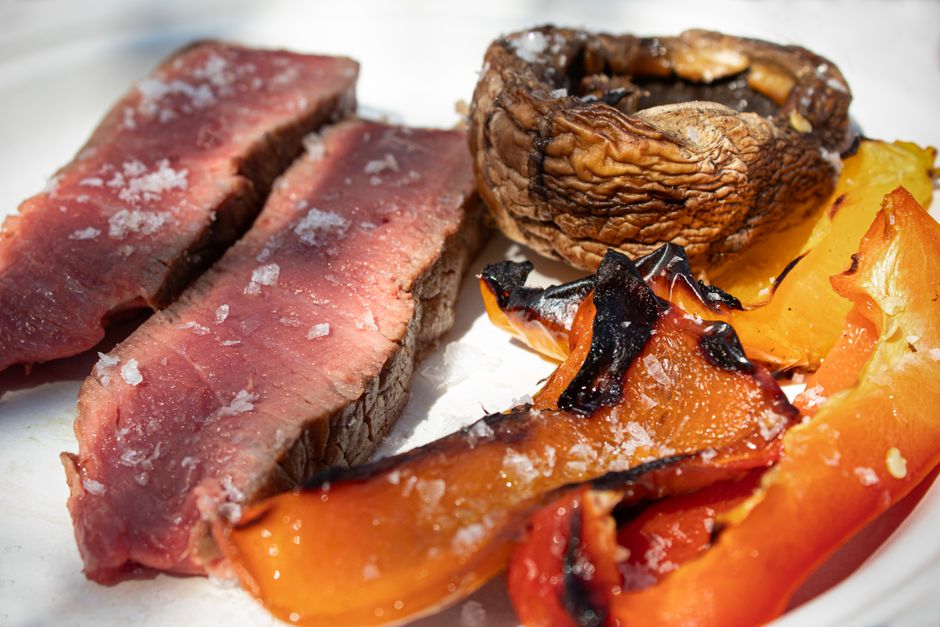
When you pull a steak off the grill at 125°F, it doesn't stop cooking. Heat already stored in the outer layers continues moving inward, and the center temperature rises another 5–10°F over the next 5–10 minutes. Pull at your target temperature, and you've already overcooked it. This is carryover cooking, and accounting for it is the single most reliable way to hit doneness targets consistently.
The Science Behind Carryover Cooking
Heat moves from hot areas to cool areas — always. When meat is on a grill or in an oven, the outer layers absorb heat faster than the center. When you remove the meat, the outer layers are still significantly hotter than the center. They haven't finished transferring their stored heat inward. They continue doing so for several minutes after the meat leaves the heat source.
The technical term is thermal inertia. The outer layers of a thick steak might be at 160°F when the center reads 125°F. Remove it from heat, and those 160°F outer layers continue transferring energy to the 125°F center. The center rises; the outer layers cool toward equilibrium. Net result: center temperature climbs 5–10°F over the next several minutes.
The amount of rise depends on three variables: how thick the meat is (thicker = more stored heat = bigger rise), how hot the cooking environment was (higher temp cooking = more heat in the outer layers = bigger rise), and how long the meat rests (longer rest = more equilibration = higher rise until it peaks, then slow decline).
How Much Temperature Rise to Expect
| Cut / Thickness | Cooking Temp | Expected Rise | Pull Temperature |
|---|---|---|---|
| 1-inch steak (high heat) | 500°F+ | 3–5°F | 125–127°F for MR |
| 1.5-inch steak (high heat) | 500°F+ | 5–7°F | 123–125°F for MR |
| Whole chicken (350°F oven) | 350°F | 5–7°F | 158–160°F |
| Turkey (325°F oven) | 325°F | 5–10°F | 155–160°F |
| Ribeye roast (low-and-slow) | 250°F | 3–5°F | 127–130°F for MR |
| Brisket / Pork shoulder | 225–275°F | 3–5°F | 195–200°F |
Notice the pattern: lower cooking temperatures produce smaller carryover rises, even on thick cuts. A prime rib cooked low-and-slow at 250°F rises only 3–5°F after removal. The same cut finished hot (say, seared at 500°F after the slow cook) would rise more. High heat = more stored energy in the outer layers = bigger carryover.
Equipment and Setup
A reliable instant-read thermometer is non-negotiable. Carryover cooking is a 5–10°F phenomenon — if your thermometer is ±3°F off, you've eliminated your ability to manage the pull temperature accurately. Use a thermometer with ±1–2°F accuracy.
A resting surface matters more than most cooks realize. Resting on a cold metal sheet pan will cool the meat faster than resting on a wooden cutting board. The cooler the surface, the more the outer layers dump heat downward rather than inward. Rest on a warm wooden board or loosely tent with foil to retain heat in the outer layers and encourage even temperature equalization.
A probe thermometer left in during the rest period lets you watch the temperature rise in real time. This is the most accurate way to understand carryover behavior for your specific equipment, cooking method, and cut thickness.
Temperature Milestones by Cut
| Meat | Target Doneness | Final Temp | Pull At | Rest Time |
|---|---|---|---|---|
| Steak | Medium-rare | 130–135°F | 125°F | 5 min |
| Steak | Medium | 140–145°F | 135°F | 5 min |
| Chicken (thigh) | Safe/juicy | 165°F | 160°F | 3–5 min |
| Pork chop (1 inch) | Safe/moist | 145°F | 140°F | 3 min |
| Brisket | Probe-tender | 200–205°F | 195–200°F | 1–2 hrs wrapped |
For chicken, the USDA safe minimum is 165°F. Pulling at 160°F and resting for 3 minutes is safe because the 3-minute hold time at 160°F achieves the same pathogen reduction as instantaneous 165°F — this is what's called time-temperature pasteurization. You get juicier chicken without compromising safety.
Step-by-Step Process
Step 1: Determine Your Pull Temperature
Subtract your expected carryover rise from your target final temperature. For a 1.5-inch ribeye at medium-rare (130–135°F final) cooked on high heat, expect 5–7°F of rise. Pull temperature: 125°F.
Step 2: Monitor Continuously Near the End
Check temperature every 2 minutes when the meat is within 15°F of your pull temperature. The last 15 degrees go faster than you expect — especially on thin cuts over high heat. A 1-inch steak can go from 110°F to 125°F in 90 seconds.
Step 3: Pull at the Right Moment
Move the meat immediately to a resting surface when the probe hits your pull temperature. Every additional minute on heat is additional carryover loading — the outer layers absorb more heat that will transfer inward during rest.
Step 4: Rest on an Appropriate Surface
Wood cutting board or a warm plate. Not a cold stainless tray. Not a wire rack sitting in a draft. The goal during rest is even temperature equalization, not rapid cooling. Loose foil tent prevents the surface from drying but doesn't meaningfully affect the carryover rise.
Step 5: Monitor During Rest (Optional but Educational)
Leave a probe in during the rest period. Watch the temperature climb, peak, and begin declining. For a 1.5-inch steak, you'll see the peak temperature at 6–8 minutes. This data informs your pull temperature for future cooks of the same cut.
Step 6: Slice When Temperature Stabilizes
Cut when the temperature has peaked and stabilized — not while it's still rising. A steak that reads 130°F and is still rising is a steak you'll cut into at 133°F. A steak that has been at 131°F for 2 minutes is done resting. Slice.
Common Mistakes
Pulling at your target temperature. This is the core mistake. Pulling a medium-rare steak at 130°F means serving a medium steak at 135–137°F. Pull 5°F below target. Always.
Using carryover estimates from thin cuts on thick cuts. A 1-inch steak and a 2-inch tomahawk behave completely differently. The tomahawk has 3x the thermal mass and rises significantly more. Don't use a 5°F estimate for a thick cut cooked at high heat — it's closer to 8–10°F.
Resting in the oven at low temp. Some recipes say to "hold" meat in a 170°F oven during rest. That's not resting — that's continuing to cook. Rest at room temperature unless you're doing a deliberate hold for service timing.
Cutting immediately off the grill. A steak cut immediately at 125°F will be at 125°F — but the internal temperature distribution will be wildly uneven. The outer layers will be 160°F+ and the center 125°F. You'll get an uneven color gradient, juice loss from the hot outer layers, and a result that looks wrong even if the center number is technically correct.
Applying steak carryover rules to BBQ meats. Brisket and pork shoulder cooked at 225°F have minimal carryover — 3–5°F at most. The hold period (wrapping in butcher paper or foil and resting in a cooler for 1–2 hours) is about temperature equalization and collagen hydration, not carryover cooking. These are different processes. See the brisket cook time calculator for timing your hold window.

Advanced Techniques
Reverse sear takes advantage of minimal carryover. When you cook a steak low-and-slow at 250°F to 115°F, then sear in a 550°F pan for 45 seconds per side, the sear adds a crust without pushing carryover beyond 5°F. The outer layers haven't had time to load up with heat. Pull at 125°F and rest 3 minutes. The result is a more even temperature gradient from edge to center than any other method produces.
Temperature spiking on thin cuts. A ¾-inch pork chop on a 600°F cast iron will spike in surface temperature during the sear. The carryover at that thickness can be 10°F if you're not careful. Pull at 130°F and it'll land at 140–142°F — right in the safe zone for pork (145°F minimum per USDA guidelines).
Turkey breast vs. thigh carryover. The breast and thigh have different carryover behavior because of their different thermal masses and fat content. The breast can overshoot its target by more than the thigh. For a whole roasted turkey, pulling at 155°F in the breast (while the thigh reads 165°F) and resting 30 minutes lands you with a breast at 160°F and a thigh at 170°F. Dry, but food-safe. Alternatively, cook spatchcocked to equalize temperatures across both sections.
FAQ
How many degrees does meat rise after resting?
Depends on thickness and cooking temperature. Thin steaks (1 inch) on high heat: 3–5°F. Thick steaks (1.5–2 inch) on high heat: 5–10°F. Whole birds cooked at 325–350°F: 5–8°F. Low-and-slow BBQ meats at 225°F: 3–5°F. When in doubt, use 5°F as your carryover estimate and adjust from experience.
Does carryover cooking happen in the oven?
Yes — and it's more significant than grilling in some cases. A whole roast chicken in a 425°F oven has more stored heat in the outer layers than one cooked at 325°F. The high-heat oven produces a larger carryover rise. Low-and-slow oven roasting (250–300°F) minimizes carryover to 3–5°F.
Should I tent with foil while resting?
Loosely, yes — primarily to prevent surface moisture loss and skin from getting soggy. A tight foil tent traps steam and softens the crust you worked to develop. Loose foil or no foil both work for carryover; the tenting is about texture, not temperature management.
Does carryover cooking apply to fish?
Yes, but fish is so thin and delicate that carryover is minimal — 2–3°F maximum for a standard fillet. Since fish goes from perfectly cooked to overdone in a narrow window (5–10°F), that 2–3°F is still worth accounting for. Pull fish 2–3°F below target, not at target.
Why is my steak always overcooked even when I use a thermometer?
You're likely pulling at your target temperature instead of below it. If you want medium-rare at 130–135°F, pull at 123–125°F and rest for 5 minutes. Also check that your thermometer is calibrated — a 3°F high reading means you're pulling 3°F earlier than you think, which might actually be correctly accounting for the error without you knowing it.
How long should I rest meat?
General guidance: 1 minute per 100 grams of meat, minimum 5 minutes for steaks and chops, 15–30 minutes for whole chickens, 30–60 minutes for large roasts and whole turkeys. BBQ brisket and pork shoulder benefit from 1–2 hours wrapped in butcher paper in a cooler. The temperature will stay above 140°F for hours in a quality cooler.
Recommended by Titan Grillers
IP67 Waterproof Digital Meat Thermometer
Reads in 2–3 seconds · Backlit LCD · Built-in magnet · Free returns
Free BBQ Calculators
Use our free tools to nail your cook times, temperatures, and quantities every time.
You Might Also Like


Join the Grill Masters Club
Get exclusive recipes, techniques and special offers on our premium meat thermometers.