How to Use a Meat Thermometer Correctly: Complete Guide for Perfect Results Every Time
This comprehensive guide teaches readers how to properly use meat thermometers for perfect cooking results. It covers thermometer types, proper placement techniques, temperature targets for different meats, special considerations for various cooking methods, troubleshooting tips, and maintenance advice. The post emphasizes that mastering temperature control is fundamental to cooking success.

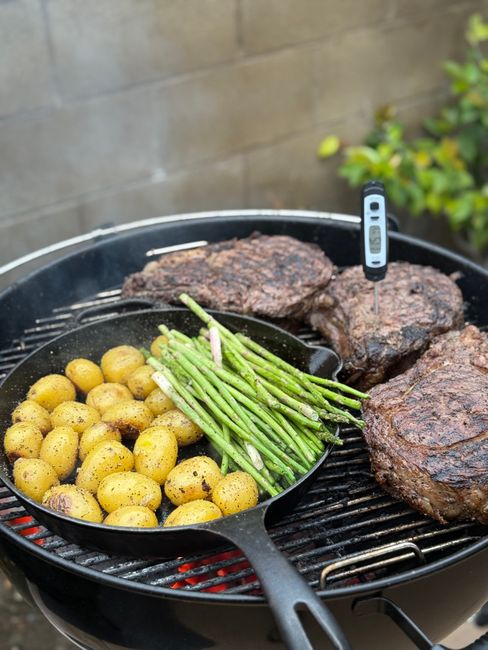
Insert the probe into the thickest part of the meat, away from bone, fat, and the cooking surface. Wait 2–3 seconds for a digital instant-read, or until the number stops moving. That's it. Everything else is knowing which target temperature to aim for — and not hitting it too late.
Why Temperature Matters
Cooking by time and color is a guess. A 1-inch steak on a cast iron pan takes 4 minutes per side — unless it started at 38°F instead of 55°F from the fridge. That 17-degree difference changes your cook time by 90 seconds. Doesn't sound like much until you're eating a gray, overcooked ribeye.
Food safety is the non-negotiable part. Ground beef must reach 160°F to kill E. coli. Poultry must hit 165°F to eliminate Salmonella. The USDA safe minimum internal temperatures exist because bacteria levels that cause illness are invisible and odorless — you cannot eyeball them out of existence. A thermometer is the only way to know you're actually there.
On the quality side: the difference between a medium-rare steak at 130°F and a medium one at 145°F is the difference between tender and chewy. The window is 15 degrees. A thermometer that costs $15 is enough to hit that window every time.
Equipment You Need
| Type | Read Time | Best For | Price Range |
|---|---|---|---|
| Instant-read digital | 2–4 seconds | Steaks, chops, chicken pieces | $15–$100 |
| Leave-in probe | Continuous | Roasts, whole birds, smoking | $20–$50 |
| Wireless (Bluetooth/Wi-Fi) | Continuous | Long smokes, overnight cooks | $40–$280 |
For most home cooks, one good instant-read handles 90% of scenarios. The ThermoWorks ThermoPop 2 ($34) reads in 3 seconds with ±0.9°F accuracy. The Lavatools Javelin Pro ($38) reads in 2–3 seconds with ±0.9°F. Either one is fine. If you do long smokes, add a leave-in probe or wireless unit.
One thing to avoid: dial thermometers with 15–20 second read times. By the time you get a number, you've already let heat escape and introduced error from moving the meat.
Step-by-Step: How to Use a Meat Thermometer
Step 1: Calibrate Before First Use
Fill a glass with ice and cold water. Stir it for 30 seconds. Insert your probe — it should read 32°F. If it reads 35°F, you have 3 degrees of error to account for. Many thermometers have a calibration button or offset function. Run this check once a month or any time you drop the unit.
Step 2: Know Where to Insert
The probe tip reads the temperature, not the shaft. Insert until the tip is in the geometric center of the thickest part of the meat. For a chicken breast, that's the widest point, away from the bone. For a brisket, that's 2–3 inches deep into the flat. For a burger, go in from the side through the center — not straight down from the top, where you'll hit the grill grate.
Step 3: Avoid Bone, Fat Pockets, and Grill Grates
Bone conducts heat differently than muscle — it can read 10–15°F hotter than the surrounding meat. Fat pockets insulate and read colder. And if the probe tip touches a metal grate, you're reading grate temperature. All three give you wrong numbers that lead to either undercooked or overcooked meat.
Step 4: Wait for the Number to Stabilize
A fast thermometer reads in 2–3 seconds. A slow one takes 15–20 seconds. Either way, wait until the number stops moving before pulling the probe. A rising number means the probe tip is still equilibrating to the meat temperature.
Step 5: Account for Carryover Cooking
Meat continues cooking after you remove it from heat. A thick steak (1.5 inches) will rise 5–7°F during a 5-minute rest. A large pork shoulder will rise 3–5°F. Pull your meat 5°F below your target temperature and let it rest. For a 130°F medium-rare steak, pull at 125°F. For chicken at 165°F, you can pull at 160°F if you're resting for 3+ minutes.
Step 6: Clean the Probe Between Meats
Cross-contamination is a real risk. Wipe the probe with an alcohol prep pad or rinse with hot soapy water between uses — especially when going from raw to cooked, or from one protein to another. Don't skip this step at the grill just because your hands are full.

Where to Insert by Meat Type
Steaks and Chops
Insert from the side through the center of the thickest part. Go horizontally so the tip sits in the geometric middle. For a 1-inch ribeye, that's about 0.5 inches in from the edge. Target: 125°F (rare), 130–135°F (medium-rare), 140–145°F (medium). Pull 5°F below target.
Whole Chicken and Turkey
Insert into the thickest part of the thigh, not touching the bone. The thigh is always the last part to come to temperature — if the thigh is at 165°F, the breast is done. Don't trust the breast reading alone. Target: 165°F per USDA food safety guidelines. Use our chicken temperature guide for detailed doneness targets.
Brisket and Pork Shoulder
Insert 2–3 inches deep into the flat (brisket) or the thickest muscle group (pork shoulder), away from fat cap. For collagen breakdown and probe-tender texture, you're looking for 195–205°F for brisket and 195–203°F for pork shoulder. At these temperatures, you want the probe to slide in with almost no resistance — that's your real doneness indicator, and the number is just confirmation.
Burgers and Meatloaf
For burgers, insert from the side through the thickest point. For meatloaf, insert into the center from the end. Ground beef target: 160°F. No exceptions here — medium-rare ground beef is a legitimate food safety risk unlike a whole muscle steak, where bacteria stays on the exterior surface.
Fish and Seafood
Insert into the thickest part of the fillet at an angle. Fish goes from raw to overcooked in a 10-degree window — go for 130–135°F for most fish (farmed salmon, cod, halibut). Wild salmon is better pulled at 125°F to preserve texture. Shrimp are done at 120°F and frankly you can judge by color change, but a thermometer removes guesswork.
Common Mistakes
Measuring in the wrong spot. Near the surface reads 30–40°F hotter than the center. Against the bone reads falsely high. Next to a fat pocket reads falsely low. The geometric center of the thickest muscle is the only correct location.
Reading before the number stabilizes. If the number is still climbing, you're reading probe equilibration, not meat temperature. A rising number means wait. A stable number means read.
Ignoring carryover cooking. Pulling at exactly 165°F means serving at 170°F after a 5-minute rest on a thick chicken breast. For safety that's fine — for quality it's dry. Pull 5°F under your target and rest.
Not calibrating. A new thermometer from the package might already be off by 2–3°F. A dropped thermometer can shift by 5°F. The ice water test takes 90 seconds and costs nothing. Do it.
Using a dial thermometer for checking steak. A 15–20 second read time means your steak is sitting with a hole in it losing heat while you wait for an answer. An instant-read thermometer reads in 2–3 seconds. The difference in accuracy matters.
Pro Tips
Use the "probe tender" test for BBQ meats. For brisket and pork shoulder, the thermometer should slide into the meat with zero resistance — like inserting it into softened butter. This happens around 200–205°F. The number is confirmation; the probe feel is the real signal.
Check multiple spots on large cuts. A 15-lb brisket can have a 10°F temperature variation across the flat. Read two or three spots and pull at the lowest reading.
Store your thermometer probe-end down or horizontally. Storing probe-end up causes calibration fluid to shift in some designs. Check the manufacturer's storage guidance.
Know your altitude correction. Water boils at 202°F at 5,000 ft elevation. If your boiling water calibration test reads 202°F, your thermometer is accurate — the water is just boiling at a lower temp. Subtract 1°F per 500 ft of elevation from the 212°F baseline.
FAQ
Where exactly do you put a meat thermometer in a steak?
Insert from the side of the steak horizontally through the thickest part, so the probe tip sits in the center of the meat. Avoid going in from the top down (too close to the surface) or touching the grill grate with the probe tip.
How long does it take to get a reading?
A quality instant-read digital thermometer takes 2–4 seconds. Budget units take 8–15 seconds. Dial thermometers can take 15–20 seconds. Faster is better — less time holding your hand over a hot grill, and less heat escaping from the meat while you wait.
Can I leave a meat thermometer in while cooking?
Only leave-in probe thermometers are designed for this. Instant-read thermometers are not meant to stay in the oven or on the grill — the display units aren't rated for sustained high heat. Leave-in probes are clearly labeled as such and come with heat-rated cables.
Do I need to calibrate my thermometer?
Yes. Check it in ice water (32°F) before first use and periodically after. Any time you drop the unit, re-check calibration. A 3°F error doesn't sound like much until you're serving chicken that reads 165°F but is actually at 162°F.
What temperature is medium-rare steak?
130–135°F internal temperature. Pull the steak at 125–128°F and rest for 5 minutes — carryover cooking will bring it to 130–133°F. Medium is 140–145°F pull. Medium-well is 150°F pull. Well-done is 160°F and above. Each step up sacrifices moisture and tenderness.
Why does my chicken read different temperatures in different spots?
Because it is different temperatures in different spots. The breast cooks faster than the thigh; the surface cooks faster than the center. Always measure the thickest part of the thigh away from the bone — that's the coldest spot and the one that must hit 165°F. If the thigh is done, everything else is done too.
Recommended by Titan Grillers
IP67 Waterproof Digital Meat Thermometer
Reads in 2–3 seconds · Backlit LCD · Built-in magnet · Free returns
Free BBQ Calculators
Use our free tools to nail your cook times, temperatures, and quantities every time.
You Might Also Like


Join the Grill Masters Club
Get exclusive recipes, techniques and special offers on our premium meat thermometers.