Meat Thermometer Temperature Guide for Different Cooking Levels: The Secret to Perfect Meals Every Time
This comprehensive guide covers meat thermometer temperature ranges for different types of meat and cooking levels. It explains the science behind temperature's importance in cooking, provides detailed charts for beef, pork, poultry, lamb, and seafood, and offers advanced techniques like understanding carryover cooking and proper thermometer usage. The article includes practical tips, common mistakes to avoid, and naturally incorporates information about TITAN GRILLERS thermometers and related blog content.

Internal temperature is the only objective measure of doneness. Color, texture, juice color, and the poke test all require interpretation. A thermometer gives you a number. These are the numbers you need, by meat type and doneness level, plus the USDA minimums that matter for food safety.
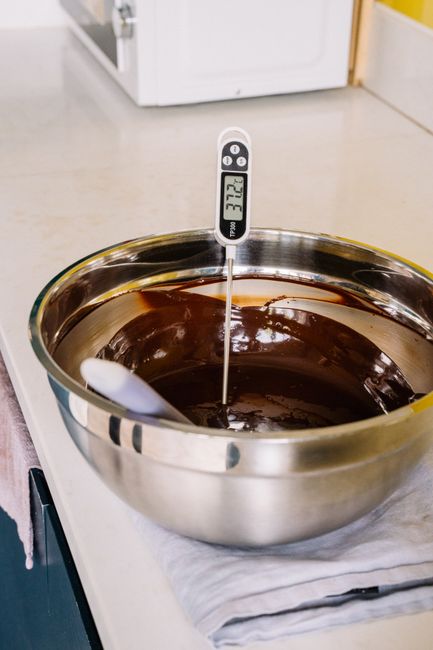
Why Internal Temperature Is the Only Reliable Doneness Test
The same cut of meat, the same thickness, cooked at the same grill temperature will hit different internal temperatures at the same clock time — depending on starting temperature, fat marbling, actual grill surface variation, and where the probe lands. Time-based guides are averages. Temperature is the actual measurement.
The "cut and look" method fails because pink color in cooked meat isn't just about undercooking. Myoglobin chemistry, smoke exposure, and nitrites in curing all create pink color in fully safe meat. Conversely, well-done beef can look gray-brown while still containing pathogens if it wasn't held at temperature long enough.
Every professional kitchen uses a thermometer. That's not a coincidence.
Beef Temperature Chart
The USDA minimum for whole beef cuts is 145°F with a 3-minute rest. Ground beef requires 160°F (no rest needed) because surface bacteria get mixed throughout during grinding.
| Doneness | Pull Temp | Final Temp (after rest) | Description |
|---|---|---|---|
| Rare | 120–125°F | 125–130°F | Bright red center, cool |
| Medium-rare | 130–135°F | 135–140°F | Pink and warm center |
| Medium | 140–145°F | 145–150°F | Light pink, hot center |
| Medium-well | 150–155°F | 155–160°F | Slight pink, mostly gray |
| Well-done | 160°F+ | 165°F+ | Gray throughout, firm |
| Brisket / chuck (BBQ) | 195–205°F | 200–210°F | Collagen fully rendered, probe-tender |
| Ground beef (burgers) | 160°F | 160°F | USDA minimum, no rest required |
Note on brisket: The 195–205°F range isn't arbitrary. Collagen (connective tissue) converts to gelatin starting around 160°F but requires time at temperature to complete. The "probe test" — where a skewer slides in with no resistance — is a texture check that correlates with full collagen rendering, typically happening between 200–205°F. Use our brisket cook time calculator to plan the full cook.
Pork Temperature Chart
The USDA updated its pork guidance in 2011: whole pork cuts (chops, roasts, tenderloin) are safe at 145°F with a 3-minute rest. This allows a light pink center, which is safe and significantly better in texture than the old 160°F recommendation. Ground pork remains 160°F.
| Cut | Pull Temp | USDA Minimum | Notes |
|---|---|---|---|
| Pork chops | 140–145°F | 145°F + 3 min rest | Slight pink center is safe and correct |
| Pork tenderloin | 140–145°F | 145°F + 3 min rest | Most tender at 140–145°F |
| Pork loin roast | 140–150°F | 145°F + 3 min rest | Carry-over raises 5–10°F |
| Pork shoulder (BBQ) | 195–203°F | 145°F (met long before done) | Needs full collagen breakdown to pull |
| Pork ribs | 195–203°F | 145°F (met early) | Also test with bend/toothpick |
| Ground pork / sausage | 160°F | 160°F | No rest required |
| Ham (fresh, uncooked) | 145–150°F | 145°F + 3 min rest | Pre-cooked ham: reheat to 140°F |
Poultry Temperature Chart
Poultry has no doneness spectrum — there is one safe temperature: 165°F throughout, per USDA food safety guidelines. Pink color in cooked poultry is not an indicator of undercooking if 165°F is verified with a thermometer.
| Cut | Safe Temp | Probe Location | Notes |
|---|---|---|---|
| Chicken breast | 165°F | Thickest part, center | Pull at 160°F, carry-over finishes it |
| Chicken thigh (bone-in) | 165°F minimum, 175°F preferred | Thickest muscle, not touching bone | 175°F gives better texture on dark meat |
| Whole chicken | 165°F | Thigh joint, innermost part | Thigh is last to reach temp |
| Turkey breast | 165°F | Deepest part of breast | Separate thigh check recommended |
| Whole turkey | 165°F | Thigh joint and breast center | Check both — they finish at different times |
| Ground poultry | 165°F | Center of patty or loaf | No rest required |
Check our chicken temperature guide for cut-specific probe placement diagrams.
Lamb and Seafood Temperatures
Lamb
| Doneness | Pull Temp | Final Temp |
|---|---|---|
| Rare | 120–125°F | 125–130°F |
| Medium-rare | 130–135°F | 135–140°F |
| Medium | 140–145°F | 145–150°F |
| Well-done | 155°F+ | 160°F+ |
| USDA minimum (whole cuts) | 145°F | + 3 min rest |
Seafood
| Type | Safe Temp | Notes |
|---|---|---|
| Fish (all varieties) | 145°F | Flesh should flake easily |
| Shrimp / lobster / scallops | 145°F | Opaque and firm texture |
| Salmon (preferred) | 125–130°F | Medium; translucent center is acceptable to many |
| Tuna steak (seared) | 125°F center | Standard sushi-grade; USDA recommends 145°F |

Carryover Cooking: Pull Early
Carryover cooking is the continued rise in internal temperature after meat is removed from heat. It happens because the outer layers are hotter than the center — heat keeps moving inward even off the grill. The amount of carryover depends on cut size and cooking temperature:
- Thin cuts (steaks under 1 inch): 3–5°F rise after pulling
- Thick cuts (roasts, large chops): 5–10°F rise
- Large roasts (prime rib, whole turkey): 10–15°F rise
For a medium-rare steak targeting 135°F final temperature, pull at 130°F. For a prime rib targeting 130°F final, pull at 118–120°F. This isn't optional — it's the difference between a steak that hits your target and one that overshoots it by 10°F while it rests on the cutting board.
The rest period serves double duty: carryover finishes the cook, and the juices redistribute through the muscle. Skip the rest and the juice pools on the cutting board instead of staying in the meat.
Probe Placement by Cut
Where you put the probe determines what you're measuring. Wrong placement gives you wrong data — you'll think the meat is done when it isn't, or pull it too early.
- Steaks and chops: Insert horizontally through the side, targeting the geometric center. Probing from the top on a thin cut gives you a surface reading, not the center.
- Whole chicken/turkey: Thigh joint, innermost part, not touching bone. The thigh is always the last to finish on poultry.
- Brisket: Thickest part of the flat, not the point. The point has more fat and finishes at a different rate.
- Pork shoulder: Geometric center of the thickest muscle mass, avoiding the bone.
- Thick roasts (prime rib, leg of lamb): Dead center — measure from multiple sides to find the geometric center, then insert to that depth.
- Fish fillets: Thickest part, center. Fish is done quickly — check early.
Frequently Asked Questions
What temperature is medium-rare steak?
Medium-rare steak has a final temperature of 130–135°F. Pull it from the grill at 128–130°F to account for 3–5°F of carryover cooking during the rest period. The center should be warm, pink, and slightly firmer than raw.
What is the safe internal temperature for chicken?
165°F throughout, per USDA guidelines. For chicken breasts, pull at 160°F — carryover cooking raises it to 165°F during the rest. For bone-in thighs, 175°F gives better texture while still being well above the 165°F safety minimum.
What temperature should pork be cooked to?
145°F with a 3-minute rest for whole pork cuts (chops, roasts, tenderloin). This allows a slight pink center, which is safe per the current USDA standard. Ground pork requires 160°F. Pork shoulder and ribs for BBQ need to reach 195–203°F for collagen breakdown and pullable texture.
What temperature is brisket done?
200–205°F internal temperature, verified by the probe test — a skewer or probe should slide in with no resistance. The range varies by individual brisket: some probe tender at 198°F, others not until 207°F. Temperature is the guide; probe feel is the confirmation.
How much does carryover cooking raise meat temperature?
It depends on cut size: thin steaks rise 3–5°F, thick roasts rise 5–10°F, and large roasts like prime rib can rise 10–15°F. Always account for carryover by pulling meat 5–10°F below your target final temperature.
Does pink pork mean it's undercooked?
No. Since 2011, the USDA allows pork chops and roasts to be served with a slightly pink center at 145°F. Pink color alone isn't a safety indicator — temperature is. Verify with a thermometer, not color.
Recommended by Titan Grillers
IP67 Waterproof Digital Meat Thermometer
Reads in 2–3 seconds · Backlit LCD · Built-in magnet · Free returns
Free BBQ Calculators
Use our free tools to nail your cook times, temperatures, and quantities every time.
You Might Also Like


Join the Grill Masters Club
Get exclusive recipes, techniques and special offers on our premium meat thermometers.