Mastering Indirect Heat: Temperature Control for Perfect BBQ
This comprehensive guide explores the art and science of indirect heat cooking and temperature control for BBQ. It covers different setup methods for various grill types, explains the science behind low-and-slow cooking, provides temperature ranges for different techniques, recommends essential monitoring tools, troubleshoots common problems, and shares advanced techniques like the reverse sear method. The article emphasizes that mastering temperature control is the key difference between amateur grilling and competition-level BBQ results.

Indirect heat means the food is not directly over the flame or coals. The heat source is offset, and the food cooks through convection — hot air circulating around it like a grill-top oven. This is how you cook large cuts, whole chickens, and ribs without burning the outside before the inside is done.
Direct heat for searing. Indirect heat for cooking through. Most BBQ worth doing uses both, in that order or reversed.
Why Indirect Heat Changes Everything
Direct heat over charcoal or a gas burner runs 600–900°F at grate level. Put a bone-in chicken thigh over that and in 15 minutes you have charred skin and raw meat at the bone — because the surface cooking rate is faster than the internal heat transfer rate.
Indirect heat at 325–375°F is the sweet spot for thick cuts. Heat surrounds the food from all sides, cooking it evenly at a rate the interior can keep up with. The result: chicken thighs cooked through to 165°F with skin that's had time to render and crisp properly.
The math: a 1.5-inch chicken thigh requires about 25–30 minutes at 375°F indirect heat to reach 165°F internal. Over direct heat at 600°F grate temp, the surface hits 180°F in under 5 minutes while the internal temp is still at 95°F. You can finish it faster — but you're managing two different rate problems simultaneously, which is why most beginners burn poultry on direct heat.
Equipment and Setup
| Item | Role |
|---|---|
| Grill with lid | Essential — indirect heat requires convective hot air, which needs a closed lid |
| Instant-read thermometer | Verify internal temp of each piece |
| Leave-in probe + ambient probe | Monitor grill temp and meat temp without lifting lid |
| Drip pan (aluminum foil tray) | Placed under food on indirect side — catches drips, adds moisture |
Temperature Milestones and Zones
| Zone | Grate Temp | Best For |
|---|---|---|
| Direct high heat | 500–700°F | Searing, burgers, thin cuts under 0.75 inches |
| Indirect high heat | 375–450°F | Chicken pieces, fish, vegetables, pizza |
| Indirect medium heat | 300–375°F | Whole chickens, spatchcocked birds, thick steaks (reverse sear start) |
| Indirect low heat (smoking) | 225–275°F | Brisket, ribs, pork shoulder, long smokes |
Step-by-Step Process
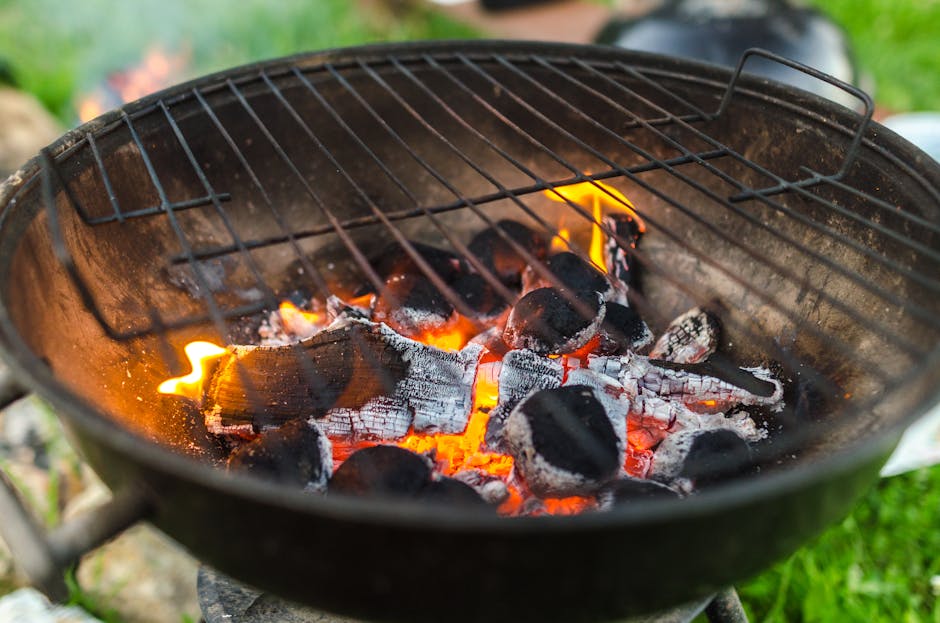
Step 1: Establish your heat zones. Push charcoal to one side of the grill (or turn off one or more burners on gas). The hot side is your direct zone. The cool side — no coals or unlit burners below — is your indirect zone. This gives you both zones simultaneously, which is how you use them effectively.
Step 2: Verify grill temperature with an ambient probe at grate level on the indirect side. Target 325–375°F for most indirect cooking. Let the grill preheat with the lid closed for 10–15 minutes.
Step 3: Place food on the indirect side. No food directly over coals or lit burners. The drip pan goes under the food on the indirect side to catch fats and prevent flare-up.
Step 4: Close the lid and don't open it. Every lid opening drops the grill temperature by 25–50°F and takes 5–10 minutes to recover. Monitor via your probes. Open only when you need to flip (halfway through) or when temp readings tell you it's time to sear.
Step 5: Final sear over direct heat (optional). If you want grill marks or a final crust — like on a reverse-sear steak — move the food to the direct heat zone for 1–2 minutes per side when internal temp is 5–10°F below target. The crust forms fast. Pull when target temp is reached.
Step 6: Rest and verify internal temperature. Check with your instant-read at multiple spots. See our chicken temperature guide for exact targets on all poultry cuts.
Setup by Grill Type
Kettle Grill (Charcoal)
The easiest indirect setup: pile all lit coals on one side. Or use the "snake method" for long smokes — arrange unlit briquettes in a C-shape around the perimeter, place lit coals at one end, and they slowly burn around the snake over 6–8 hours maintaining 225–250°F. For 2-zone cooking, put coals on both sides with the food in the center — this gives indirect heat from both sides with no direct underneath.
Gas Grill (3+ burners)
Light the two outer burners, leave the center burner off. Food goes in the center over the unlit burner. For a 2-burner grill: light one side, food goes on the other. Vent management on gas is straightforward — adjust burner knobs to hit your target indirect-side temperature.
Offset Smoker
By design, all cooking is indirect heat — the fire is in the offset firebox, and hot air circulates through the cooking chamber. The challenge is managing hot spots: most offset smokers run hotter near the firebox end. Rotate cuts periodically or use a baffle to equalize heat distribution. This is where a 2-probe setup (one near firebox, one at the far end) tells you the actual temperature gradient.
Pellet Grill
All pellet grills are indirect heat by default — the fire pot is below a heat deflector and the food never sees direct flame. Set the temperature on the controller, verify with an ambient probe at grate level (the controller's internal sensor isn't always at grate level), and proceed. The simplest setup for indirect cooking.
Common Mistakes
Not using a lid. Indirect cooking requires convective hot air circulation. Without a lid, you have direct radiant heat in one direction and no cooking envelope. A lidless grill is only useful for direct cooking. If you're doing indirect heat on a charcoal grill without the lid, you're just having a campfire next to your food.
Spreading coals too thin for indirect. A thin coal layer loses temperature too fast for longer indirect cooks. Pack the coal bank densely — you want sustained heat on the hot side. For cooks over 45 minutes, plan to add coals or use the snake method.
Opening the lid every 10 minutes "to check." The probe tells you. Open when you need to flip, when the probe tells you to act, or when it's time to sear. Not every 10 minutes because you're curious.
Ignoring the drip pan. Fat dripping onto coals or burner covers causes flare-ups. On indirect setups, a simple aluminum foil tray under the food catches everything and can be discarded. It's not optional — especially for chicken with skin.
Assuming grill temperature equals food temperature. A 400°F grill environment doesn't mean your food is cooking at 400°F. Thick cuts in the center of the grill may only see 350°F due to the heat differential between the lid and the grate. Always verify actual food temperature with a thermometer.
Advanced Techniques
Reverse Sear: Start a thick steak (1.5–2 inches) on the indirect side at 250°F until internal temp reaches 115–120°F. Then move to the direct side for 2 minutes per side to build a crust. Result: edge-to-edge even doneness with a proper crust. Significantly better than traditional sear-first. Requires a thermometer — this technique doesn't work without one.
Two-Zone Finishing: Cook large chicken pieces mostly on indirect, then move to direct heat for the last 5 minutes to crisp the skin. The skin only crisps through direct radiant heat, not convection. But you need the meat at target temperature first, which means indirect for the cook and direct only for the finish.
Smoke on a Kettle: Add 2–3 wood chunks to the indirect coals for smoke flavor during indirect cooks. Use hardwood (hickory, apple, cherry, oak) — not softwood or pine. The chunks should smolder slowly, not flame. Soak is optional; it delays smoke production but doesn't significantly change final smoke flavor.
For large group indirect cooks, use our BBQ meat per person calculator to figure quantities, and the brisket cook time calculator if brisket is on the menu. Planning a 14-hour indirect smoke for 20 people starts with knowing your quantities.
Reference the USDA safe minimum internal temperatures for all cuts cooked via indirect heat — the method doesn't change the safe internal temperature requirements.
FAQ
Does indirect heat on a gas grill produce the same results as charcoal?
For temperature control and consistency, gas is easier. For smoke flavor, charcoal with wood chunks is better. If smoke flavor matters to you, use charcoal or add wood chunks/chips in a foil pouch to a gas grill. For pure cooking results — tenderness, juiciness, even doneness — both are equally capable at the same temperature.
How long does indirect heat cooking take vs. direct?
Roughly 3–5x longer for the same internal temperature target. A direct-heat burger takes 8–10 minutes. An indirect-heat whole chicken takes 60–90 minutes. The difference is the temperature differential: 600°F direct vs. 350°F indirect. Both get to 165°F, just at very different rates.
Can I do indirect heat on a two-burner gas grill?
Yes — light one burner, cook on the opposite side. The limitation is temperature management: with one burner providing all heat, the indirect side may run cooler than a 3+ burner setup. Preheat longer (15–20 minutes) and monitor with an ambient probe on the indirect side.
What temperature should the indirect zone be for ribs?
225–250°F for traditional 3-2-1 or 2-2-1 method. 275°F for faster "hot and fast" ribs (about 3–4 hours total). At 225°F, baby backs take 5–6 hours. At 275°F they take 3–4 hours. Both produce excellent ribs; the lower temp version has more smoke penetration time.
Do I need a drip pan for indirect heat?
For anything fatty — chicken skin, pork shoulder, brisket — yes. The fat drips and causes flare-ups or bitter smoke from fat burning on coals. A foil tray under the food on the indirect side prevents this. For lean cuts like pork tenderloin or fish, less critical but still good practice.
How do I maintain 225°F on a kettle for a long smoke?
The snake method (unlit briquettes in a C-shape, 5–6 lit coals at one end) burns steadily for 6–8 hours at 225–250°F with minimal adjustment. Vent settings: bottom vent 25% open, top vent 25% open for most conditions. Adjust bottom vent by 10% increments to raise or lower temp. Monitor with an ambient probe at grate level — don't rely on the lid thermometer.
Recommended by Titan Grillers
IP67 Waterproof Digital Meat Thermometer
Reads in 2–3 seconds · Backlit LCD · Built-in magnet · Free returns
Free BBQ Calculators
Use our free tools to nail your cook times, temperatures, and quantities every time.
You Might Also Like


Join the Grill Masters Club
Get exclusive recipes, techniques and special offers on our premium meat thermometers.