Cold Smoking vs. Hot Smoking: Temperature Guide
This comprehensive guide explores the critical differences between cold smoking (68°F-86°F) and hot smoking (126°F-250°F) temperatures. It covers the best foods for each method, equipment considerations, troubleshooting tips, and safety practices. The article emphasizes the importance of precise temperature control for successful smoking and recommends the TITAN GRILLERS Digital Meat Thermometer for accurate temperature monitoring.

Hot smoking cooks and smokes simultaneously at 225–275°F. Cold smoking adds smoke flavor without cooking at temperatures below 90°F. They are not interchangeable — using cold smoking technique on chicken is a food safety problem, not a style preference.
Hot smoking is what most BBQ cooking is. Cold smoking is for cheese, cured meats, fish that will be cooked or cured later, and smoked salt. Know which you're doing before you light anything.
The Key Difference: Safety, Not Just Flavor
The critical distinction between cold and hot smoking isn't flavor — it's whether the food reaches a safe internal temperature during the smoking process. Hot smoking brings meat to USDA-recommended safe internal temperatures (145–165°F depending on the protein). Cold smoking does not.
Food that hasn't been cooked or cured properly and is cold smoked at sub-90°F temperatures can harbor Salmonella, Listeria, and other pathogens. This is why cold smoked salmon is typically cured with salt first — the curing process inhibits bacterial growth. Cold smoked chicken with no prior cure is a Salmonella waiting to happen.
Hot smoking: cook and flavor simultaneously. Cold smoking: add smoke flavor to food that is already safe (or will be made safe through other means).
The Science Behind Each Method
Hot smoking (225–275°F): Heat and smoke penetrate simultaneously. The smoke compounds (guaiacol, syringol, and hundreds of other phenolic compounds) deposit on the protein surface while heat denatures proteins and converts collagen. The result: cooked, smoky, tender meat. The 225–275°F range is the standard low-and-slow BBQ range because it's hot enough to break down connective tissue over time but cool enough to prevent the exterior from drying out before the interior is done.
Cold smoking (below 90°F, ideally 65–85°F): Smoke is generated in a separate chamber or with a cold smoke generator, and the smoke (but not the heat) is directed to the food. The food temperature stays below 90°F — cool enough that the smoke deposits on the surface without cooking. The smoke flavor penetrates gradually over hours. The food doesn't change texture because it isn't cooking.
Equipment and Setup
| Equipment | Hot Smoking | Cold Smoking |
|---|---|---|
| Smoker | Any offset, drum, pellet, or kettle | Dedicated cold smoker or cold smoke generator attachment |
| Temperature control | 225–275°F, stable | Below 90°F — often requires ice trays in summer |
| Thermometer | Leave-in probe for meat + ambient | Ambient thermometer to verify temp stays below 90°F |
| Wood | Chunks or chips, typically 4–8 oz per hour | Fine wood dust (for maze/tube generators), very controlled burn |
Temperature Ranges Compared
| Method | Smoker Temp | Food Temp | Duration |
|---|---|---|---|
| Cold smoking | Below 90°F | Under 90°F throughout | 1–24 hours |
| Warm smoking | 90–160°F | Not fully cooked | Gray zone — not recommended without cure |
| Hot smoking (low) | 200–250°F | Reaches safe temps (145–165°F) | 2–18 hours depending on cut |
| Hot smoking (standard) | 225–275°F | Reaches safe temps | 1–14 hours |
Hot Smoking: Step-by-Step
Step 1: Set smoker to 225–250°F at grate level (verify with ambient probe, not lid gauge). For brisket, target the lower end for tenderness. For chicken, you can run 275–300°F for crispier skin.
Step 2: Insert leave-in probe into thickest part of the meat, away from bone or fat seams. For brisket, center of the flat. For chicken, deepest part of the thigh.
Step 3: Add wood. 4 oz of wood chunks at the start, then 2 oz every 45–60 minutes for the first 3–4 hours. After that, the smoke ring stops developing — additional wood adds smoke flavor but diminishes returns.
Step 4: Monitor temperature without opening the smoker. Your leave-in probe tells you everything. Open only to wrap (if doing the Texas Crutch) and to remove the meat.
Step 5: Pull at target temperature (200–205°F for brisket, 165°F for chicken). Verify at multiple points with instant-read. Rest as required by cut.
Cold Smoking: Step-by-Step
Step 1: Verify the food is ready for cold smoking. Cheese: no preparation needed. Fish: cure in salt (dry cure or brine) for 8–12 hours first. Meat: must be cured with pink curing salt (sodium nitrite/nitrate) before cold smoking. Uncured meat is not safe to cold smoke.
Step 2: Set up cold smoke generator. A pellet tube or maze smoker generates smoke without significant heat. Fill with fine wood dust, not chips. Light one end with a torch and let it smolder. Or use a separate smoke chamber connected to your main smoking chamber via a long hose — the smoke cools in transit.
Step 3: Verify chamber temperature is below 90°F before adding food. In summer, you may need ice trays in the chamber. In winter, the ambient temperature often handles this naturally. Use an ambient thermometer in the chamber — not the food's internal temperature, since the food isn't cooking.
Step 4: Cold smoke for the required time. Cheese: 2–4 hours for light smoke, 6–8 hours for strong smoke flavor. Fish: 4–12 hours depending on thickness and desired intensity. Let cheese rest in the refrigerator unwrapped for 24–48 hours after smoking to let the smoke flavor mellow and distribute.
Common Mistakes
Cold smoking meat without curing it first. This is the primary food safety risk in cold smoking. The temperature range (60–90°F) is the exact growth range for Listeria and Salmonella. Cheese is safe because it's not a growth medium for these pathogens at those temperatures. Meat is not. If you want to cold smoke meat, cure it with sodium nitrite first.
Smoking at "warm" temperatures (100–160°F). This gray zone is worse than either hot or cold smoking. The temperature is too high for successful cold smoking (the food partially cooks and surface proteins set, blocking further smoke penetration) and too low for hot smoking (the food never reaches safe internal temperatures). Stay below 90°F for cold smoking or above 200°F for hot smoking.
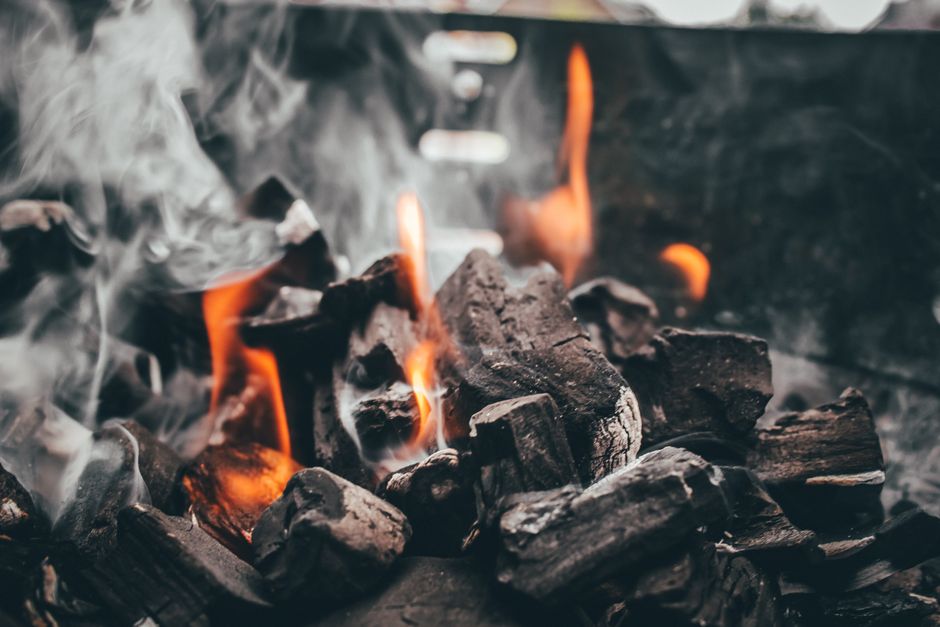
Using too much wood during hot smoking. Thick white smoke deposits bitter creosote on the meat. Thin blue smoke is what you want — it's barely visible and deposits clean smoky flavor. Less wood, more patience. If your smoker is billowing white smoke, choke the airflow down.
Trusting the lid thermometer on hot smoking. Already discussed in the brisket section, but worth repeating: lid thermometers measure at lid level, not at the grate where your meat is. A 25–50°F difference is typical. Use a grate-level ambient probe.
See the USDA safe minimum internal temperatures for final targets on all proteins when hot smoking.
Which Method for Which Food
| Food | Method | Notes |
|---|---|---|
| Brisket, pork shoulder, ribs | Hot smoke | Standard BBQ, must reach 200–205°F |
| Whole chicken, turkey | Hot smoke | Must reach 165°F internal |
| Cheese (cheddar, gouda, mozzarella) | Cold smoke | 2–4 hrs light, 6–8 hrs strong; rest 24–48 hrs after |
| Salmon (smoked salmon) | Cold smoke after curing | Cure 8–12 hrs first; cold smoke 6–12 hrs |
| Bacon (from pork belly) | Cold smoke after curing | Cure 7 days with pink salt; cold smoke 6–8 hrs |
| Sausage | Hot smoke | Must reach 155–165°F internal depending on type |
| Salt, nuts, vegetables | Cold smoke | 1–2 hours is usually sufficient |
FAQ
Can I cold smoke chicken to add flavor before cooking it?
Yes, if you then cook it to 165°F immediately after. The cold smoking step adds smoke flavor, then the cooking step (grill or oven) makes it safe. This is called "smoking for flavor, cooking for safety." Don't cold smoke chicken and consider it done — it still needs full cooking.
What wood works best for cold smoking cheese?
Apple and cherry wood for mild, sweet smoke that doesn't overpower. Alder for salmon (traditional choice). Hickory and oak for stronger flavor on aged hard cheeses like cheddar. Avoid mesquite for cold smoking — it's too aggressive and can make cheese taste bitter without the heat to balance it.
Does hot smoked meat need a thermometer or can I judge by time?
Always use a thermometer. Time is an estimate — the actual cook depends on the specific cut's thickness, fat distribution, starting temperature, and smoker consistency. A 12-pound brisket takes "about 12 hours" at 225°F in the same way a drive takes "about 3 hours" — traffic (or a stall, a cold meat mass, or a fire that dropped) changes everything.
What's the maximum temperature for cold smoking?
Below 90°F is the standard guideline for genuine cold smoking. Above 90°F, protein denaturation begins and the surface starts to set — you're entering warm smoking territory. Some sources say below 100°F is acceptable. The main concern is keeping meat out of the bacterial growth danger zone (40–140°F) for extended periods without a curing agent.
How long does cold smoked cheese last?
Wrapped tightly and refrigerated, cold smoked cheese lasts 2–4 weeks. Vacuum-sealed, it lasts 2–3 months. The smoke itself has some antimicrobial properties, but treat it like regular cheese for storage purposes. Allow it to rest 24–48 hours after smoking before wrapping — the flavor mellows significantly during this rest period.
Can I use a pellet grill for cold smoking?
Yes, with an attachment. Most pellet grills can't maintain below 150–180°F on their own — the fire management system keeps the burner active. A cold smoke tube or maze generator placed inside a pellet grill (with the grill turned off) provides cold smoke without the heat. Verify chamber temperature stays below 90°F with an ambient probe.
Recommended by Titan Grillers
IP67 Waterproof Digital Meat Thermometer
Reads in 2–3 seconds · Backlit LCD · Built-in magnet · Free returns
Free BBQ Calculators
Use our free tools to nail your cook times, temperatures, and quantities every time.
You Might Also Like


Join the Grill Masters Club
Get exclusive recipes, techniques and special offers on our premium meat thermometers.