How to Use a Meat Thermometer with Different Cooking Methods
This comprehensive guide explains proper meat thermometer placement and usage across various cooking methods including grilling, roasting, smoking, sous vide, and deep frying. It covers common mistakes to avoid, provides temperature charts for different meats, shares advanced techniques, and offers troubleshooting tips for consistent readings.

The target temperature for safe and properly cooked meat doesn't change based on how you cooked it. But where you position the probe, when you check, and what type of thermometer you use all vary significantly depending on your cooking method.
Using a thermometer correctly on a grill is different from using it in a smoker, which is different from using it in an oven. This guide covers the practical differences for each.
Why the Cooking Method Changes Thermometer Use
Cooking method determines:
- Cook speed and heat distribution. A direct-heat grill cooks from the outside in at high speed. A smoker cooks at 225°F with very gradual heat penetration. These produce different temperature gradients inside the meat.
- Whether a leave-in or instant-read is appropriate. Checking every few minutes on a 2-hour roast means opening the oven repeatedly. A leave-in probe is more practical. A 4-minute steak over direct heat? Instant-read is the only practical option.
- Environmental interference. A grill creates convective heat currents that can affect probe readings near the surface. A smoker has a stable temperature environment that makes leave-in probes very accurate.
Grilling (Direct and Indirect)
Direct Heat Grilling
Direct grilling is high heat (400–600°F+), fast cooking. The outside of the meat is much hotter than the center. For a 1.5-inch steak over direct heat, the surface might be 450°F while the center is still 90°F — and this gap closes faster than most people expect.
Thermometer approach: Use an instant-read. Check from the side of the cut to reach the center. For steaks, check once when you estimate you're close to done — around the 70–80% mark of expected cook time. Opening the grill repeatedly drops the temperature and extends the cook.
When to check: For a 1-inch steak at medium-high heat, start checking at the 3–4 minute mark per side. Target: 125–130°F for medium-rare (will rise to 130–135°F during rest).
Indirect Heat Grilling
Indirect grilling (burners on one side, food on the other) replicates oven-like conditions at higher temperatures (typically 350–400°F). The heat is more even, cook times are longer, and a leave-in probe becomes practical.
Thermometer approach: Either instant-read or leave-in works. For whole chickens or large cuts on indirect heat, a leave-in probe monitoring the thickest part eliminates guesswork.
Use the chicken temperature guide for whole bird timing on indirect heat.
Smoking
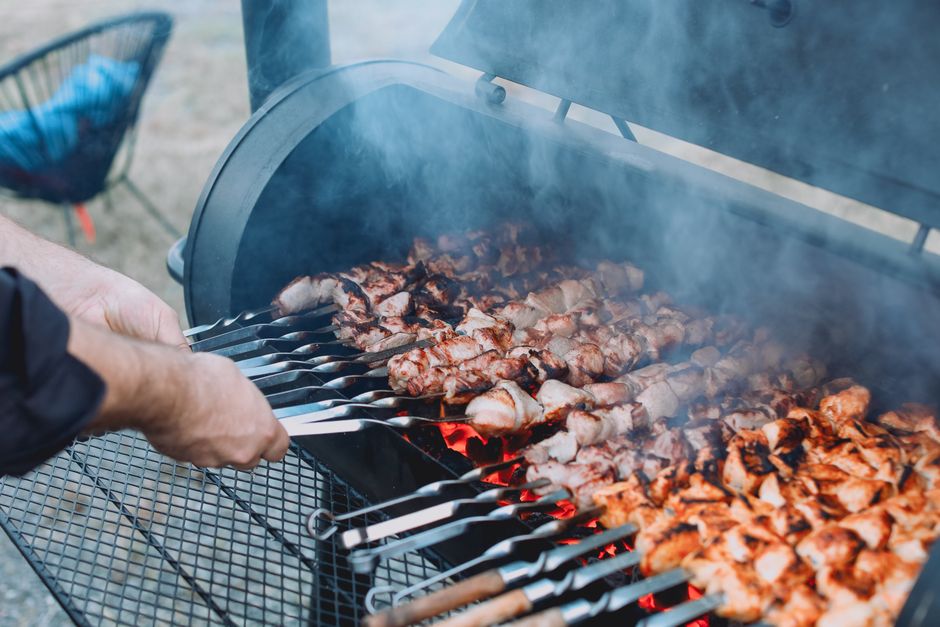
Smoking is a leave-in probe situation. A 12-hour brisket cook checked every hour with an instant-read means opening the smoker 12 times. Each opening drops smoker temperature by 30–50°F and takes 10–20 minutes to recover. Over a 12-hour cook, you can add 2–3 hours this way.
Thermometer approach: Leave-in probe with an external display. Insert the probe into the thickest part of the flat (for brisket) or the center of the cut (for pork shoulder). Position the probe so it isn't near bone or touching the grate.
Two probe configuration (recommended): One probe in the meat, one monitoring ambient smoker temperature 2–3 inches from the meat. The smoker's built-in thermometer is often 30–50°F off from the actual cooking zone temperature. Knowing your real grate-level temperature lets you make better decisions about airflow and fuel.
Use the brisket cook time calculator for timing estimates, and the pork shoulder cook time calculator for pulled pork. These help you estimate when to start monitoring more closely.
Probe Position for Smoking
The probe should be positioned so the tip is in the geometric center of the thickest part of the meat. For a whole brisket, that's the thick end of the flat, avoiding the point (which is fattier and reads higher). For a pork butt, it's the center, away from the bone. The probe should enter from the side so it runs parallel to the cooking grate, minimizing heat interference from above or below.
Oven Roasting
Oven roasting at 325–375°F is one of the most forgiving methods for thermometer use. The heat is consistent, the cook is gradual, and temperature gradients in the meat are smaller than with grill or smoker methods.
Thermometer approach: Leave-in probe for anything over 45 minutes (whole birds, roasts, pork loin). Instant-read for spot-checks on smaller cuts (chicken pieces, pork chops).
For a whole turkey: Insert the leave-in probe into the innermost thigh before putting the bird in the oven. Monitor until the thigh reads 165°F. Then check the breast with an instant-read — the breast typically finishes before the thigh, but verify both. Don't rely on the pop-up timer that comes with many store-bought turkeys — it activates at around 180°F, which is overcooked. Your thermometer is more accurate.
Oven placement note: The oven thermometer on the door is often inaccurate by 25–50°F. If your meat consistently cooks faster or slower than recipes predict, check your oven's actual temperature with an oven thermometer. This has nothing to do with your meat thermometer — it's a separate calibration issue.
Stovetop (Pan-Searing, Braising)
Pan-Searing
Pan-searing runs at 400–500°F and typically starts with direct contact on a cast iron or stainless pan. Cook times are short (3–6 minutes per side for most steaks). An instant-read thermometer is the only practical option.
Thermometer approach: Remove the pan from the direct heat source before inserting the probe (or baste it aside briefly). Check from the side. Check once near the end of expected cook time — not repeatedly, which would extend the cook and produce an uneven result.
For steak in a cast iron with butter basting: the surface temperature of the pan is 450°F+ and the meat is being actively basted. This produces a fast sear and temperature rise. A 1.25-inch ribeye can be ready in 6–8 minutes total — start checking at 3 minutes per side.
Braising
Braising (low temperature in liquid, 275–325°F) produces very gradual cooking. An instant-read works fine — check periodically (every 30–45 minutes after the first hour) by inserting through the lid or removing the lid briefly.
Braised cuts are typically cooked to fall-apart texture (190–205°F for short ribs, chuck roast, pork shoulder) rather than just safe temperature. Use temperature as a guide to when to start checking for texture — probe for tenderness with a fork once you're in the 190–200°F range.
Deep Frying
Deep-fried food cooks at 325–375°F oil temperature. The high-temperature surrounding environment cooks quickly from all sides simultaneously. For most fried chicken pieces, the cook is 12–18 minutes depending on piece size and oil temperature.
Thermometer approach: Instant-read, checked after removing from the oil (or briefly raising the piece). Insert into the thickest part, away from bone. Target: 165°F for chicken.
Two temperatures to monitor: The oil temperature (use a candy/deep-fry thermometer or an instant-read in the oil away from food) and the meat's internal temperature. Keeping oil at 325–350°F ensures the meat has enough time to cook through before the coating burns.
Reverse Sear
Reverse sear — low oven first (200–275°F), then high-heat sear to finish — is a method designed around precise temperature control. The thermometer is the central tool, not an afterthought.
Phase 1 (low oven): Insert a leave-in probe or check with instant-read every 15–20 minutes. Pull the meat when it reaches 115–120°F for medium-rare (steak) or 125°F for medium. The goal is to reach a precise temperature uniformly throughout the cut before applying finishing heat.
Phase 2 (sear): Sear at maximum grill or pan heat for 1–2 minutes per side. Recheck with instant-read. You're looking for 5–10°F of additional rise. For medium-rare, pull at 128–130°F during the sear — carryover will finish it at 130–135°F.
The reverse sear advantage: when you use low heat to slowly bring meat to within 10°F of target before searing, the temperature gradient is minimal — almost the same temperature from edge to center. This produces edge-to-edge even doneness that direct searing can't match.

Common Mistakes by Cooking Method
Grilling: Checking Too Often
Every time you open a charcoal grill to check the temperature, the fire loses air and slows. The cool air entering drops cooking temperature. More openings = longer, less controlled cook. Plan to check once near the end of expected cook time.
Smoking: Trusting the Lid Thermometer
Most smoker lid thermometers sit 4–6 inches above the cooking grate. That 6 inches represents 30–50°F of temperature difference. If your smoker's gauge reads 225°F but the actual grate temperature is 175°F, your brisket is going to take 3+ extra hours. Monitor actual grate temperature with a second probe.
Oven Roasting: Using the Pop-Up Timer
Pop-up timers in store-bought turkeys activate at 180°F. The USDA safe temperature is 165°F. There's a 15°F gap between "safe" and "when the timer pops" — that's 15°F of overcooking. Use a real thermometer.
Pan-Searing: Not Accounting for Carryover
Pan-searing produces aggressive carryover heat — the pan and the crust retain significant heat after you pull the meat. A steak coming out of a 500°F cast iron pan will rise 8–10°F during a 5-minute rest, which is more than the 5°F from a grill. Pull at 120–125°F for medium-rare if finishing in a hot cast iron pan.
Deep Frying: Only Monitoring the Meat
If the oil temperature drops too far (below 300°F), the coating absorbs more oil and the meat spends more time at sub-safe temperatures. Monitor oil temperature throughout the fry — not just meat temperature at the end. A separate thermometer in the oil is the right approach.
FAQ
Do I need different thermometers for different cooking methods?
Not necessarily different brands or models, but different types. An instant-read handles grilling, pan-searing, deep frying, and oven spot-checks. A leave-in probe handles smoking, long oven roasts, and indirect grilling. Owning both covers every practical situation.
Can I use a leave-in probe on a high-heat grill?
Most leave-in probes are cable-rated to 716°F, which handles any grill temperature. The issue is the probe position — on a high-heat grill, radiant heat from the grate can affect readings near the surface. Position the probe so it enters from the side of the cut, pointing away from the heat source.
Why does my thermometer read lower than expected when grilling?
Three likely causes: (1) you're reading before stabilization, (2) the probe is near bone which reads cooler than surrounding meat in some situations, or (3) the probe is near a cold spot (like the center of a thick cut that hasn't had time to heat through). Check your probe insertion point and wait for stabilization.
How do I monitor smoker temperature without buying a second thermometer?
You can't reliably — not with a single probe. The option is to use a dual-probe thermometer with one probe in the meat and one monitoring grate-level ambient temperature. Most quality leave-in probe sets include this capability.
Does the thermometer need to be calibrated differently for high-heat methods?
No. A calibrated thermometer reads accurately across the temperature range regardless of cooking method. Calibration in ice water (32°F) establishes accuracy at the low end; the unit should hold that accuracy across the range. If a thermometer reads accurately at 32°F but poorly at 165°F, it has a different problem than calibration offset.
Should I use an instant-read or leave-in probe for reverse sear?
Both, ideally. A leave-in probe in the meat during the low-heat oven phase lets you hit your exact pull temperature (115–120°F) without repeatedly opening the oven. Switch to an instant-read for the searing phase when you need a fast check in the middle of an aggressive sear.
Recommended by Titan Grillers
IP67 Waterproof Digital Meat Thermometer
Reads in 2–3 seconds · Backlit LCD · Built-in magnet · Free returns
Free BBQ Calculators
Use our free tools to nail your cook times, temperatures, and quantities every time.
You Might Also Like


Join the Grill Masters Club
Get exclusive recipes, techniques and special offers on our premium meat thermometers.