Ultimate Comparison: Professional BBQ Thermometers Worth the Investment
This comprehensive blog post compares professional-grade BBQ thermometers across different categories (instant-read, wireless, and multi-probe), explaining what features justify their higher price points. It highlights specific top models in each category, including the TITAN GRILLERS thermometer, and provides real-world performance insights. The article emphasizes how investing in a quality thermometer prevents costly cooking mistakes and improves BBQ results.

Quick Verdict Table
| Model | Price | Best For | Response | Accuracy |
|---|---|---|---|---|
| Thermapen One | $105 | Best instant-read overall | ~1 sec | ±0.5°F |
| ThermoWorks Signals | $199 | Long smokes, competition | 4-probe wireless | ±1.8°F |
| FireBoard 2 Drive | $249 | Data logging, fan control | 6-probe wireless | ±1.5°F |
| Lavatools Javelin Pro Duo | $55 | Best mid-range instant-read | ~2–3 sec | ±0.9°F |
| ThermoPro TP25 | $50 | Budget wireless monitoring | 4-probe Bluetooth | ±1.8°F |
| ThermoPro TP19H | $22 | Budget instant-read | 3–4 sec | ±1.8°F |
What to Look For
Accuracy (±°F)
The spec that matters most. ±0.5°F means the thermometer's reading is within half a degree of true temperature. ±2°F means it could be 2 degrees off in either direction — which is a 4°F total range of uncertainty. For poultry safety (165°F) and steak doneness (130–145°F depending on preference), that range matters.
Most thermistor units advertise ±1°F but test closer to ±1.5–2°F at the extremes. Thermocouple units (like Thermapen) consistently deliver on their ±0.5°F spec.
Response Time
Anything under 5 seconds is usable. Under 3 seconds is comfortable. Under 2 seconds is for people who check multiple locations on every cook. See the full breakdown in the response time context: the jump from 3 seconds to 1 second costs about $60–80 in thermometer price. Only worth it if you check temps frequently and every second of grill-open time matters to you.
Probe Design
Probe tip diameter under 2mm gives you versatility — thin enough for delicate fish, sturdy enough for a brisket. Tip material should be 304-grade stainless steel minimum. Probe length matters for large cuts: a 4.5-inch probe can reach the center of a 10-lb pork shoulder.
Waterproof Rating
IP65 is the minimum worth considering. IP67 (submersible to 1 meter) is better. Grills create steam, rain happens, and cleaning requires water. A non-waterproof thermometer is a time bomb.
Wireless vs. Instant-Read
These solve different problems. An instant-read gives you spot-check readings in seconds — you pick it up, check, set it down. A wireless leave-in probe monitors continuously so you don't have to open the lid. Competition cooks and long smokes benefit significantly from wireless. For everyday grilling, a good instant-read is enough.
Budget Tier ($15–35)
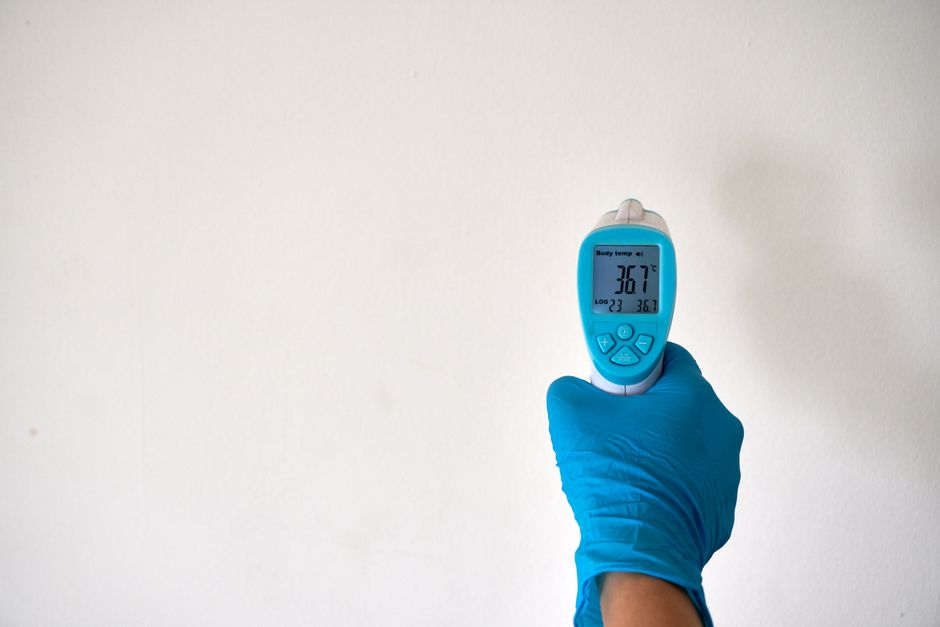
ThermoPro TP19H (~$22)
Pros: 3–4 second response, IP65 waterproof, auto-rotating display, fold-out probe, ±1.8°F accuracy from a unit that actually tests close to that. Solid battery life (~3,000 hours). Built-in magnet.
Cons: Plastic build feels budget. Backlight could be brighter. Response time lags behind mid-range units on thin cuts.
Verdict: The best $20 instant-read on the market. If you want basic digital performance without spending $50, this is it.
Kizen Instant Read Thermometer (~$20)
Pros: 2–3 second response (fast for this price), waterproof, foldable probe, auto-shutoff.
Cons: Accuracy varies more unit-to-unit than premium brands. Some units test closer to ±2.5°F.
Verdict: Fine for occasional use. Test it against an ice bath when it arrives — you'll know immediately if yours is in spec.
Mid-Range Tier ($50–80)
Lavatools Javelin Pro Duo (~$55)
Pros: 2–3 second response, ±0.9°F accuracy, large display, ambidextrous foldable design, built-in magnets. Waterproof. Looks and feels significantly more premium than its price.
Cons: Probe is slightly thicker than Thermapen (affects speed marginally). Backlight could be better.
Verdict: Best value in this price range. Gets you 85–90% of Thermapen performance at 50% of the price.
ThermoWorks Thermopop 2 (~$35)
Pros: 3-second response, ±1°F accuracy, waterproof (IP67), 360° rotating display. ThermoWorks build quality at a lower price point.
Cons: Display is smaller than competitors. No backlit screen on some versions.
Verdict: A smart step up if you want ThermoWorks reliability without the Thermapen price. Consistently accurate.
ThermoPro TP25 (~$50)
Pros: 4 simultaneous Bluetooth probes, app with temperature alerts, 500-foot Bluetooth range (in practice, 100–200 feet through walls). Good for monitoring multiple meats in a long smoke.
Cons: Bluetooth only — no WiFi, so you have to stay within range. App has mixed reviews. Not an instant-read.
Verdict: Best budget option for monitoring long cooks. Pair with a cheap instant-read for final pull checks.
Premium Tier ($100+)
Thermapen One (~$105)
Pros: ~1-second response, ±0.5°F accuracy, IP67 waterproof, motion-sensing auto-on/off, backlit display, probe that folds to any angle. The benchmark every other instant-read is measured against. 3,000-hour battery life.
Cons: Price. That's the whole list of cons.
Verdict: The best instant-read thermometer made. Buy it once and stop thinking about thermometers. Used by food scientists, competition cooks, and professional kitchens for a reason.
ThermoWorks Signals (~$199)
Pros: 4 simultaneous probes, WiFi + Bluetooth connectivity (so you can monitor from anywhere), ±1.8°F accuracy, cloud data logging, alerts to phone. Works with ThermoWorks Billows fan for pit temperature control.
Cons: Not an instant-read — it's a monitoring system. Expensive if you don't do long cooks. Overkill for burgers on a gas grill.
Verdict: The gold standard for long-smoke monitoring. Competition teams and serious pitmasters buy this.
FireBoard 2 Drive (~$249)
Pros: 6 probe inputs, WiFi + Bluetooth, cloud data logging with cook history, built-in fan port for temperature control, USB-C charging. ±1.5°F accuracy across 6 probes simultaneously.
Cons: Most expensive option here. Fan purchase is separate. More features than most backyard cooks will use.
Verdict: The most capable monitoring system available. Justified if you do frequent long smokes or competition BBQ. Overkill for anything else.
Full Comparison Matrix
| Model | Type | Accuracy | Response | Waterproof | Wireless | Price |
|---|---|---|---|---|---|---|
| Thermapen One | Instant-read | ±0.5°F | ~1 sec | IP67 | No | $105 |
| Lavatools Javelin Pro Duo | Instant-read | ±0.9°F | ~2–3 sec | IP65 | No | $55 |
| ThermoWorks Thermopop 2 | Instant-read | ±1°F | ~3 sec | IP67 | No | $35 |
| ThermoPro TP19H | Instant-read | ±1.8°F | 3–4 sec | IP65 | No | $22 |
| ThermoPro TP25 | Wireless monitoring | ±1.8°F | Continuous | Probe only | Bluetooth | $50 |
| ThermoWorks Signals | Wireless monitoring | ±1.8°F | Continuous | Probe only | WiFi + BT | $199 |
| FireBoard 2 Drive | Wireless monitoring | ±1.5°F | Continuous | Probe only | WiFi + BT | $249 |
When Budget Is Fine
Most home cooks don't need a Thermapen. Here's when a $20–30 thermometer genuinely covers everything you need:
- You grill on weekends for family — steaks, chicken, burgers, the usual rotation
- You check temperature once per cook, not multiple times
- You're not doing anything where 2°F of imprecision changes the outcome
- You cook thick cuts that carry over slowly and have wide safe windows
The ThermoPro TP19H at $22 handles all of that. It reads in 3–4 seconds, is accurate to ±1.8°F (which means your 165°F pull is actually 163–167°F — fine for all food safety purposes), and it's waterproof enough for normal use.
Where budget falls short: high-frequency checking (thin cuts, multiple spot-checks per cook), competition accuracy requirements, or if you're routinely cooking at the precise edge of a temperature window where 2°F matters.
Common Buying Mistakes
Buying a Wireless Monitor When You Need an Instant-Read
A wireless leave-in probe tells you what temperature a fixed point in the meat reached 30 seconds ago. An instant-read tells you what temperature a specific spot is right now. For most grilling, you need instant-read. Wireless monitoring is valuable for long smokes — not for checking a burger.
Prioritizing Features Over Accuracy
Backlit display, magnetic housing, rotating probe — these are nice. None of them matter if the thermometer reads 3°F off. Check the accuracy spec first. Then the response time. Then the features.
Trusting "Professional Grade" Marketing
Every thermometer under $30 claims to be "professional grade" or "restaurant quality." The specs tell the truth. ±1.8°F at 3–4 seconds is not the same as ±0.5°F at 1 second, regardless of what the packaging says.
Not Calibrating on Arrival
Any thermometer — budget or premium — can have a calibration error out of the box. The ice bath test takes 3 minutes. Know your baseline before you trust the device with a cook you care about.
FAQ
Is the Thermapen One worth $105?
If you cook frequently and temperature precision matters to you, yes. It's the most accurate, fastest instant-read available for consumers and will last 10+ years with normal use. If you grill occasionally and check temp once per cook, a $25 unit does the job fine. The Thermapen solves problems that infrequent cooks don't have.
Do I need both a wireless probe and an instant-read?
For long smokes (brisket, pork shoulder, ribs over 4+ hours): yes, having both is genuinely useful. The wireless probe monitors trends without opening the lid; the instant-read confirms the final pull temp and checks multiple locations. For everyday grilling, an instant-read alone is sufficient.
What's the difference between WiFi and Bluetooth wireless thermometers?
Bluetooth requires you to stay within 100–300 feet of the thermometer base (through walls reduces this significantly). WiFi connects to your home network so you can monitor from anywhere with a phone signal. For competition or events away from home WiFi, Bluetooth-only is limiting. For backyard cooks, Bluetooth is usually enough range.
Are cheap thermometers actually accurate?
Some are, some aren't. The ThermoPro TP19H and similar units test reasonably close to their ±1.8°F spec. Very cheap units ($8–12) often test at ±3–5°F, which is a meaningful range. The ice bath test tells you immediately where yours falls. Budget thermometers also tend to drift faster over time, so calibrate every few months.
What thermometer do competition BBQ teams use?
Most competition teams use a combination: Thermapen One or similar for spot-checking pull temps (±0.5°F matters in competition), plus ThermoWorks Signals or FireBoard for overnight monitoring of multiple probes. Some teams also use the probe-tender test as their primary pull decision, using temperature as a secondary confirmation.
Can I use the same thermometer for both grilling and candy/frying?
Yes, if the probe's temperature range covers both. Most good instant-reads handle -58°F to 572°F, which covers candy (300–350°F), oil (325–375°F), and meat (130–210°F) without issue. Check that the probe shaft is rated for direct oil immersion if you're using it for deep frying.
Recommended by Titan Grillers
IP67 Waterproof Digital Meat Thermometer
Reads in 2–3 seconds · Backlit LCD · Built-in magnet · Free returns
Free BBQ Calculators
Use our free tools to nail your cook times, temperatures, and quantities every time.
You Might Also Like


Join the Grill Masters Club
Get exclusive recipes, techniques and special offers on our premium meat thermometers.