The Science Behind Meat Resting Times: Why It Matters
This blog post explains the science behind meat resting, detailing how the process allows for temperature redistribution, moisture reabsorption, and protein restructuring. It provides specific resting time guidelines for different cuts of meat, best practices for the resting environment, and common mistakes to avoid. The article includes a personal anecdote about testing rested vs. unrested steaks and naturally incorporates the TITAN GRILLERS thermometer as a helpful tool for achieving perfect results.

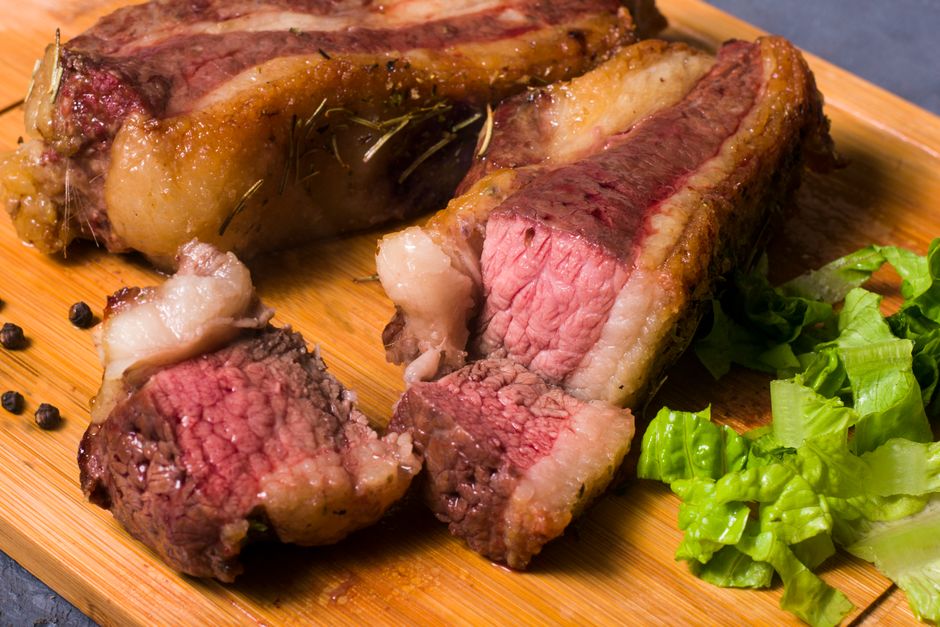
When you cut into a steak straight off the grill, the juices flood your cutting board. When you wait 5 minutes first, they stay in the meat. The reason is muscle fiber contraction — cooked fibers squeeze inward during cooking and only relax once the temperature starts to equalize. Resting gives them time to reabsorb the moisture they expelled. Skip it, and you're eating a drier, less flavorful piece of meat regardless of how well you cooked it.
The Science: Why Juices Leave and How Resting Keeps Them
Muscle fibers are coiled protein strands surrounded by water-based fluid. When heated above 140°F, these proteins denature and contract — they physically squeeze tighter, pushing fluid outward toward the surface of the meat. At the same time, the surface is cooling faster than the center, creating a pressure gradient that drives fluid toward the cooler exterior zones.
When you cut into hot meat, you release that pressure. The fluid has nowhere to go but your cutting board. Studies measuring juice loss in cut-immediately vs. rested steak show 20–40% more juice on the board when cut immediately. That juice is flavor, moisture, and collagen — exactly what makes meat taste good.
During resting, two things happen simultaneously: the temperature gradient between outer and inner layers equalizes (reducing pressure differences), and the contracted muscle fibers relax as they cool slightly below their maximum contracted state. This allows them to reabsorb some of the expelled fluid before you cut. The reabsorption isn't complete — you still get some juice loss — but the difference in moisture retention is measurable and noticeable.
The temperature drop during a 5-minute rest on a 1-inch steak is modest — 2–5°F from peak. The steak doesn't go cold. It goes from 130°F to 125–128°F over 5 minutes. That's still hot enough to serve immediately, and significantly juicier than a steak cut at 130°F with no rest.
Equipment and Setup
An instant-read or leave-in thermometer lets you confirm the steak reached your pull temperature and monitor the rest. This matters because different steak thicknesses and cooking methods create different carryover arcs — resting a steak that's still rising toward its peak is pointless if you cut too early.
Resting surface: a wood cutting board or a warm plate (run it under hot water and dry it). Avoid cold metal surfaces — they conduct heat away from the meat faster than the interior needs, which shortens effective rest time and produces an uneven result.
Foil: optional, and misunderstood. Tenting loosely with foil slows surface cooling and prevents the outer crust from losing moisture to evaporation. It does not meaningfully affect the resting process inside the meat. The crust will soften slightly under foil — which you may or may not care about depending on whether you want a crackly exterior on your steak.
Resting Times by Cut
| Cut | Weight/Thickness | Rest Time | Notes |
|---|---|---|---|
| Steak (sirloin, ribeye) | 1 inch | 5 minutes | Minimum 3 min if thin |
| Steak (tomahawk, thick) | 2+ inches | 8–10 minutes | More mass, more time needed |
| Pork chop | 1 inch | 3–5 minutes | Required 3 min rest per USDA |
| Chicken breast | 6–8 oz | 3–5 minutes | Helps redistribute moisture |
| Whole chicken | 3–5 lbs | 15–20 minutes | Tent loosely with foil |
| Turkey (whole) | 12–20 lbs | 30–45 minutes | Tented; use this time to make gravy |
| Ribeye roast (prime rib) | 4–8 lbs | 20–30 minutes | Loosely tented |
| Brisket | 10–16 lbs | 1–2 hours | Wrapped in butcher paper in cooler |
| Pork shoulder | 8–12 lbs | 1–2 hours | Wrapped in butcher paper or foil in cooler |
The USDA requires a 3-minute rest for whole cuts of pork, lamb, and veal after reaching 145°F. This isn't just a food safety rule — it's the minimum time needed for temperature equalization in a pork chop. The standard applies at USDA food safety guidelines.
Step-by-Step Resting Process
Step 1: Pull at the Right Internal Temperature
Account for carryover cooking and pull 5°F below your target. For a medium-rare steak targeting 130–135°F, pull at 125°F. Rest immediately on a wood cutting board or warm plate.
Step 2: Choose Your Resting Environment
Room temperature, away from drafts. A warm cutting board retains more heat than a cold one. If ambient temperature is below 65°F (common outdoors), loosely tent with foil to prevent excessive surface cooling.
Step 3: Do Not Cut, Pierce, or Press
Any puncture during resting releases the pressure you're waiting to let equalize. Don't test with a fork, don't cut to peek, don't press with a spatula. Leave it alone.
Step 4: Time It
Use the times in the table above. For steaks and chops, set a 5-minute timer. For whole birds and roasts, set a 20–30 minute timer. For BBQ smoked meats, the rest is long enough that you can wrap them and hold in a cooler for hours without concern.
Step 5: Slice Against the Grain
After resting, slice against the grain — perpendicular to the direction of the muscle fibers. This has nothing to do with resting; it's a separate technique. But it's done at the same moment, and combining proper resting with slicing against the grain produces noticeably more tender results than either alone.
The Cold Surface Myth
A widespread tip says to rest meat on a cold wire rack so "air circulates underneath and prevents steaming." This is misguided for most applications. A cold rack draws heat out of the bottom of the meat faster than the rest of the surface is cooling, creating temperature gradients that slow equalization. For a thin steak, it can drop the core temperature too quickly before fibers have time to relax. Rest on a wood board unless you have a specific reason to accelerate cooling.
The exception: if you're doing a reverse sear and need the exterior as dry as possible before the final sear, a rack in the fridge for 30 minutes after the slow cook achieves a dry surface. But that's a different process than resting for juice retention.
Common Mistakes
Resting too long and serving cold meat. A 1-inch steak loses approximately 5–8°F over a 5-minute rest. At 10 minutes it's lost 10–12°F and is approaching lukewarm. Time it. Resting too long is a real problem, not just theoretical.
Cutting "just a small slice to check." Any cut releases pressure and juice. If your thermometer read the right pull temperature, trust it. A "peek" cut is wasted juice.
Resting in the same pan the meat cooked in. If the pan is still hot (which it is, for the first several minutes), the meat is still cooking. Rest on a different surface — not the cooking vessel.
Not resting chicken at all. Chicken breast is even more unforgiving than steak about juice loss when cut hot. The lean, low-fat meat has less to compensate with — every drop of moisture matters. Rest chicken breast for at least 3–5 minutes. Use the chicken temperature guide to confirm your pull temperature before resting.
Assuming resting fixes overcooking. Resting helps retain moisture but doesn't reverse overcooking. A chicken breast that hit 180°F is dry — no amount of rest time changes that. The moisture was expelled and evaporated during cooking. Resting manages moisture redistribution of what remains; it doesn't regenerate lost moisture.
Variations and Advanced Techniques
The cooler hold for BBQ meats. Brisket and pork shoulder benefit from being wrapped in butcher paper (or foil) and placed in a cooler (empty, pre-warmed with hot water for 5 minutes, then dried) for 1–2 hours. The cooler's insulation keeps the meat above 140°F for hours. During this time, collagen continues hydrating the meat, temperature gradients fully equalize, and the texture improves noticeably. This isn't just resting — it's an active part of the cook for large BBQ cuts.
The warm oven hold for roasts. A prime rib can be rested at 170°F in the oven (the lowest most ovens can maintain) for up to 1 hour without significant quality loss. This is useful for timing dinner service. The meat stays warm, the juices redistribute, and you don't need to rush slicing. Keep a probe in during the hold to confirm temperature doesn't climb above 140°F.
Compound butter on resting steak. Placing a tablespoon of herb butter on a resting steak serves two purposes: it slows surface cooling (the fat layer acts as insulation) and the heat of the meat melts the butter to baste the surface as you rest. A minor technique, but one that makes a visible difference on the final plate.
FAQ
Does resting really make meat juicier?
Yes — measurably. Studies on juice loss in immediately-cut vs. rested beef consistently show 20–40% more juice on the cutting board when cut immediately. That's not anecdote; it's protein chemistry. The difference is noticeable when eating the steak, not just visible on the board.
How do I keep meat warm while it rests?
Loose foil tent on a warm wood cutting board is the standard. For large roasts (turkey, prime rib), a 170°F oven works as a hold. For BBQ smoked meats, a pre-warmed cooler maintains temperature above 140°F for 2–4 hours. Don't rest on the stovetop or in a hot oven — that continues cooking, not resting.
Does a 5-minute rest make the meat cold?
No. A 1-inch steak pulled at 125°F rested for 5 minutes will be at approximately 120°F — plenty hot to eat. The 5°F drop is not perceptible as "cold." You would need to rest 15–20 minutes for the steak to approach lukewarm, and that's too long for thin cuts.
Should I rest burgers?
A brief 2-minute rest after pulling a burger from the grill helps slightly. Burgers are thin enough that the difference is minor — nothing like resting a thick steak. More impactful for burgers: not pressing them with a spatula during cooking, which squeezes out far more juice than cutting without resting.
Can I rest meat too long?
Yes. For steaks and chops, beyond 10 minutes you're losing meaningful heat. Beyond 15 minutes, thin cuts are genuinely cold. For whole birds and roasts, beyond 45 minutes at room temperature, the outer portions are entering the food safety danger zone (below 140°F). Rest within the recommended time windows and eat promptly.
Why does some meat need to rest longer than others?
Thermal mass. A 15-lb brisket has 100x the mass of a 1-inch steak — the temperature gradient from exterior to center is much larger and takes far longer to equalize. Larger cuts need more rest time simply because the physics of heat transfer through more mass takes more time. The rule scales: roughly 1 minute of rest per 100 grams of meat.
Recommended by Titan Grillers
IP67 Waterproof Digital Meat Thermometer
Reads in 2–3 seconds · Backlit LCD · Built-in magnet · Free returns
Free BBQ Calculators
Use our free tools to nail your cook times, temperatures, and quantities every time.
You Might Also Like


Join the Grill Masters Club
Get exclusive recipes, techniques and special offers on our premium meat thermometers.