How to Read a Thermometer Correctly: Avoiding Common Mistakes
This comprehensive guide addresses common mistakes when reading meat thermometers and provides practical solutions for accurate temperature readings. The article covers proper probe placement, waiting for stabilization, taking multiple readings, calibration importance, and specific techniques for different thermometer types. It also includes maintenance tips and troubleshooting advice, with natural references to TITAN GRILLERS products and related blog content.
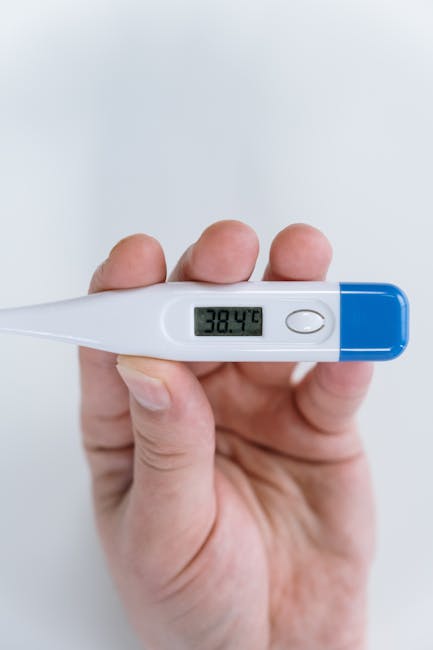
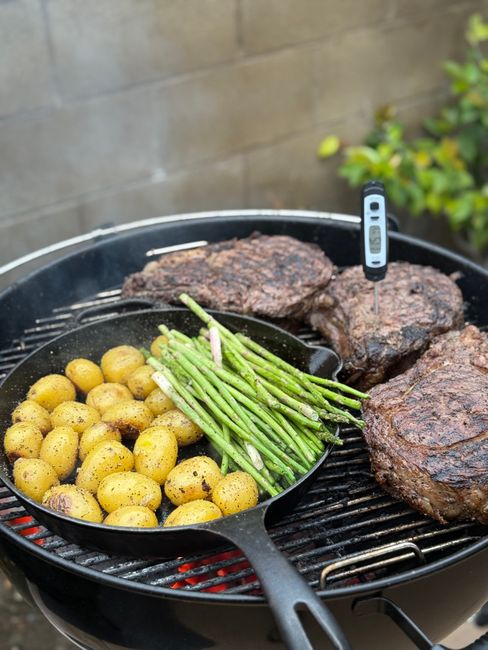
The most common thermometer mistake isn't buying a bad one — it's using a good one wrong. Inserting the probe in the wrong spot, not waiting for the reading to stabilize, or touching bone with the tip all produce misleading numbers from an accurate thermometer. Here's how to use it correctly.
Why Reading Matters as Much as the Thermometer Itself
An accurate thermometer can still give you a wrong reading if the probe tip isn't in the right location. The thermal center of a chicken thigh runs 10–15°F cooler than the surface of the same thigh during cooking. A probe touching bone reads 5–10°F higher than the surrounding meat. Insert the probe 1/4-inch too shallow on a thick steak and you're reading the outer cooked layer, not the cold center.
Probe placement determines what temperature you actually measure. The number on the display is exactly as accurate as where you put the probe.
Equipment You Need
| Equipment | What to Look For | Why It Matters |
|---|---|---|
| Digital instant-read | ±1°F accuracy, 3–5 sec response | Quick checks with minimal lid-open time |
| Thin probe tip (under 2mm) | 1.5–1.8mm ideal | Works for delicate fish and thin cuts without tearing |
| Probe length 4.5"+ for large cuts | Check spec before buying | Reaches center of thick roasts without burning your hand |
How to Read a Thermometer: Step-by-Step
Step 1: Identify the Thermal Center
The thermal center is the thickest, densest, coldest part of the meat — the point that takes the longest to cook through. For steaks: the geometric center. For chicken pieces: the deepest part of the muscle, away from bone. For whole birds: the thickest part of the inner thigh. For roasts: the dead center of the largest cross-section.
This is the point that determines doneness. If the thermal center is at temp, the rest of the meat is safely past it.
Step 2: Determine Insertion Direction
Insert the probe so the tip ends up at the thermal center — but get there via the least obstructed path.
- Steaks and chops: Insert from the side (not the top), parallel to the cooking surface. The probe travels horizontally through the center of the meat.
- Burgers: Insert from the side, not from the top. From the top, the probe tip passes through multiple temperature zones and never reads a single consistent point.
- Chicken breasts and thighs: Insert into the thickest part, angled to stay within the muscle mass. Keep the tip away from the bone by at least 1/4 inch.
- Whole birds: Insert into the thickest part of the thigh, parallel to the thigh bone but not touching it. Aim for the deep muscle, not the skin side.
- Roasts and brisket: Insert into the geometric center from the end of the roast, traveling along the grain as much as possible.
Step 3: Insert to the Right Depth
The sensor on most instant-read thermometers is in the final 1/4 inch of the probe tip. You need the tip — not the middle of the probe — at the thermal center. For a 1.5-inch thick steak, that means inserting about 3/4 inch from the side so the tip sits at center. For a 4-inch thick roast, the tip needs to be at 2 inches depth.
Inserting too shallow gives you a surface reading, not a center reading. Inserting too deep (especially in small cuts) means your tip is on the other side of the thermal center.
Step 4: Wait for Stabilization
A good instant-read stabilizes within 3–5 seconds. Wait until the number stops climbing before reading. If you read at 2 seconds and the probe is still climbing, you'll get a number 3–8°F below the actual temperature. Hold until stable — you'll see the number plateau.
Step 5: Check Multiple Locations
For anything larger than a single steak or burger patty, check at least two spots. Whole chicken: check both thigh and the thickest breast. Large roast: check the center and one spot near an end. Burger batch on the grill: check one from the middle of the grate and one from the edge (different temperatures).
The lowest reading is the actual doneness. The meat is done when all checked points are at or past target.
Insertion Points by Meat Type

| Meat | Insert From | Target Location | Avoid |
|---|---|---|---|
| Steak (under 2") | Side | Geometric center | Fat cap, bone |
| Thick steak/roast (2"+) | End or side | Dead center of cut | Outer 1/2" edges |
| Burger patty | Side | Horizontal center of patty | Top insertion (multiple zones) |
| Chicken breast | Thick end | Thickest point, center depth | Near surface, near bone |
| Chicken thigh (bone-in) | Thick inner meat side | Deep in thigh muscle | Bone contact (reads 5–10°F high) |
| Whole chicken/turkey | Thigh, inner side | Thickest thigh muscle, near (not at) thigh joint | Stuffing cavity, bone, breast only |
| Pork chop (bone-in) | Side | Center of the eye muscle | Near rib bone |
| Brisket flat | Thin end, angled | Center of flat at thickest point | Fat layer, point section for doneness check |
| Salmon fillet | Side | Center of thickest section | Skin, pin bones |
For chicken specifically, the chicken temperature guide covers target temps for every cut. For brisket cook timing, see the brisket cook time calculator.
Common Mistakes
Inserting from the Top of a Burger
A burger patty has three distinct temperature zones top to bottom: cooked exterior (180°F+), mid-zone (150–165°F), and center (your target). Inserting from the top passes through all three and stabilizes somewhere in the middle, not at the coldest center. Insert from the side, horizontally, to get to the true center.
Touching Bone with the Probe
Bone conducts heat differently than meat — it heats up faster during cooking. A probe tip touching bone in a chicken thigh will read 5–10°F higher than the surrounding meat. This gives you a false "done" reading when the meat itself is still undercooked. Keep the probe tip away from bone by at least 1/4 inch.
Reading Before the Number Stabilizes
The display on an instant-read climbs toward actual temperature. If you read at 2 seconds and the probe is still at 155°F and climbing, you don't know if the final reading will be 158°F or 165°F. Wait for the plateau — the number stops changing. That's the actual reading.
Checking Too Close to the Edge
The edge of any cut of meat is 10–20°F hotter than the center during cooking. Checking 1/4 inch from the edge of a pork shoulder gives you 200°F when the center is still at 185°F. Check at the geometric center, not near the surface.
Trusting One Reading on Large Cuts
Temperature varies across a large piece of meat. A whole chicken can have a 15°F difference between the thigh and the breast. A brisket flat at 200°F in the thick section might still have a 185°F section near the thin end. Check multiple spots — the lowest reading is the actual cook state of the meat.
Pro Tips
Mark your probe for consistent depth. A piece of tape or a small marker dot 1 inch from the tip gives you a visual reference for insertion depth on thin cuts. Consistent depth = consistent readings.
Wipe the probe between checks. Going from a 140°F turkey leg to checking the 165°F breast immediately gives a falsely high initial reading on the breast — the hot probe is still radiating heat into the cooler zone. Quick wipe on a paper towel, or a few seconds in cool air, resets it.
For large roasts, check in a cross-pattern. Insert at 12 o'clock, 3 o'clock, and 6 o'clock positions from the side. This maps temperature variation across the roast and tells you if there are uneven heating zones in your oven or smoker.
For official safe minimum temperature targets, see FoodSafety.gov safe minimum temperatures. For broader context, USDA food safety guidelines are the authoritative source.
FAQ
Where exactly do I put the thermometer in a chicken?
In a whole chicken, insert the probe into the thickest part of the thigh — the inner thigh side, deep in the muscle, keeping the probe tip at least 1/4 inch away from bone. Don't check the breast only; thighs run 10–15°F cooler and determine when the whole bird is done. The thigh must hit 165°F.
How do I avoid hitting bone when checking chicken pieces?
Insert from the meaty side at an angle that keeps the probe shaft parallel to the bone rather than pointing toward it. On a bone-in thigh, approach from the inner thigh side angled slightly toward the outer edge — you'll stay in the muscle mass without approaching the bone. If the number jumps unusually high, reposition slightly away from where you were.
Why does my thermometer give different readings in different spots?
That's normal and expected. Meat cooks from the outside in — the outer edges are always hotter than the center. The variation tells you about the temperature gradient inside the meat, not a thermometer malfunction. Always use the lowest reading (the coldest spot) as your reference for doneness.
How deep should I insert the thermometer probe?
Deep enough that the probe tip — where the sensor is located — sits at the thermal center of the meat. For a 1-inch steak inserted from the side, that's about 1/2 inch deep. For a 12-lb whole turkey, the probe needs to be 3–4 inches into the thigh. The probe tip, not the middle of the probe shaft, needs to be at center.
Should I take the thermometer out immediately or leave it in?
For instant-read thermometers: take it out after reading — they're not designed for continuous oven/grill heat on the housing. For leave-in probe thermometers (wireless or wired): leave the probe in throughout the cook, but keep the housing/display away from direct heat. Using an instant-read as a leave-in will damage the housing.
How do I check a thin fish fillet without it falling apart?
Use a thin probe (under 2mm tip diameter) and insert from the side of the fillet at an angle, keeping the probe parallel to the fillet surface rather than poking straight down through it. For very thin fillets under 1/2 inch, temperature checking is difficult — look for the flesh turning from translucent to opaque and flaking easily with a fork as your primary doneness indicator.
Recommended by Titan Grillers
IP67 Waterproof Digital Meat Thermometer
Reads in 2–3 seconds · Backlit LCD · Built-in magnet · Free returns
Free BBQ Calculators
Use our free tools to nail your cook times, temperatures, and quantities every time.
You Might Also Like


Join the Grill Masters Club
Get exclusive recipes, techniques and special offers on our premium meat thermometers.