Dry Aging Meat at Home: Temperature and Humidity Control
This comprehensive guide explains how to dry age meat at home with a focus on the critical temperature (34-38°F) and humidity (75-85%) controls needed for success. It covers the science behind dry aging, equipment setup options, monitoring solutions, troubleshooting common problems, and tips for selecting and cooking dry-aged meat. The article naturally incorporates the TITAN GRILLERS thermometer as a helpful tool for the process while providing valuable educational content for home meat enthusiasts.
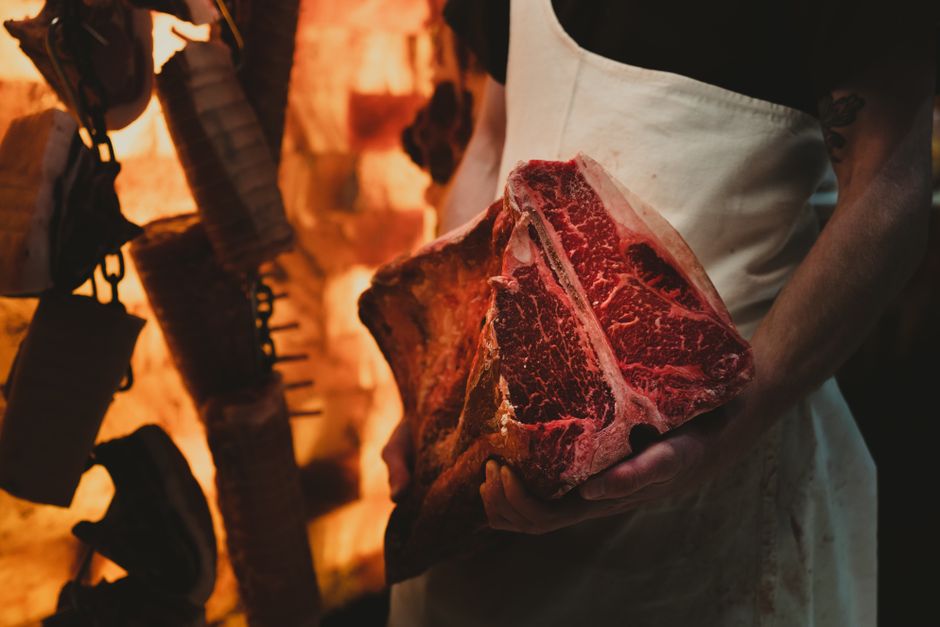
Dry aging beef at home requires two things above everything else: temperature of 34–38°F and relative humidity of 75–85%. Get those two parameters wrong and you're not dry aging — you're either growing harmful bacteria (too warm) or desiccating the surface too fast without the enzymatic activity you want (too dry).
Everything else — dedicated mini-fridge, UV light, Himalayan salt blocks — is secondary. Temperature and humidity are not negotiable.
The Science Behind Dry Aging
Two simultaneous processes happen during dry aging:
Enzymatic breakdown (proteolysis): Natural enzymes in the meat — primarily calpains and cathepsins — break down muscle proteins. This tenderizes the meat at a cellular level. The process is slow at refrigerator temperatures (34–38°F) but accelerates meaningfully at 40°F+, which is also where pathogen risk increases. The 34–38°F range is a tight window: slow enough for safe pathogen control, fast enough for meaningful enzymatic activity.
Moisture loss (concentration): The meat loses 15–30% of its weight as moisture evaporates from the surface. This concentrates flavors — the beefy, nutty, complex taste you associate with dry-aged steak is largely a concentration effect. A 20-pound ribeye roast might age down to 14–15 pounds. The trimmed, sellable portion may be 11–12 pounds. That's why dry-aged beef is expensive. You're paying for the shrinkage.
The pellicle — the dry outer crust that forms during aging — protects the meat below it from pathogen growth while allowing controlled surface evaporation. This crust is trimmed off before cooking. What remains underneath is the aged meat.
Equipment and Setup
| Item | Spec Required | Cost |
|---|---|---|
| Dedicated mini-fridge | 34–38°F, adjustable, no auto-defrost | $100–200 |
| Digital thermometer + hygrometer | ±0.5°F temp, ±3% RH accuracy | $15–30 |
| Small USB fan | Air circulation, low speed | $10–20 |
| Wire rack | Elevate meat, allow airflow underneath | $10–20 |
| Kosher salt (optional) | Place in shallow tray to absorb moisture if RH is too high | $2–4 |
Why dedicated mini-fridge? Your household refrigerator runs at 37–40°F, is opened constantly, has humidity swings from other foods, and often has auto-defrost cycles that damage the aging process. A dedicated mini-fridge you control exclusively is non-negotiable for predictable results. It doesn't need to be large — a 3.2 cubic foot unit holds a whole ribeye subprimal easily.
Why no auto-defrost? Auto-defrost cycles (frost-free refrigerators) heat the coils periodically to melt ice buildup. This creates temperature fluctuations of ±5–8°F and blows dry air across the meat, causing uneven desiccation. Manual-defrost mini-fridges hold temperature more consistently.
Temperature and Humidity Milestones
| Parameter | Target Range | Too Low | Too High |
|---|---|---|---|
| Temperature | 34–38°F | Freezing — stops enzymatic activity | 40°F+ — pathogen risk zone |
| Relative Humidity | 75–85% RH | Below 70% — too much moisture loss, surface dries before interior ages | Above 90% — mold growth risk, slimy surface |
| Airflow | Gentle, consistent | No airflow — stagnant air allows mold pockets | High airflow — uneven drying, harder crust |
Step-by-Step Process
Step 1: Source a bone-in primal or subprimal cut. Whole ribeye roast (IMPS 103), bone-in striploin, or whole bone-in short loin. The bone and fat cap protect the meat during aging. Boneless cuts without a fat cap have less protection and trim worse after aging. Avoid individual steaks — they lose too much usable meat to trimming.
Step 2: Set up and verify your aging fridge. Run the empty fridge for 24 hours with your thermometer/hygrometer inside. Confirm temperature stays 34–38°F. If humidity is below 70% RH, place a small pan of water or a box of kosher salt inside to raise it. Test for 24 hours before adding meat.
Step 3: Place meat on wire rack, fat side up. Elevating on a wire rack allows air circulation under the meat. Fat side up means fat drips down through the meat rather than collecting under it. Do not wrap the meat — it needs airflow on all sides.
Step 4: Monitor daily for the first week. Check temperature and humidity every 12–24 hours. The first 3–5 days, the surface will look tacky and start to form the pellicle. This is correct. A white or gray pellicle is normal. If you see fuzzy green, blue, or black mold that penetrates into the meat, not just surface spots, discard and sanitize the fridge.
Step 5: Rotate once per week. Flip the meat to ensure even aging and airflow on all sides. Quick, minimal-contact rotation.
Step 6: Trim before cooking. After aging, trim the pellicle (the hard outer crust) until you reach moist, red meat underneath. Also trim fat that looks oxidized (brown/gray). What remains is your aged meat. A 30-day aged 20-pound ribeye typically nets 12–14 pounds of usable meat after trimming.

Monitoring and Troubleshooting
White surface mold: Normal and expected on aging beef. Surface-only white or grayish spots are part of the pellicle. Wipe with a cloth dampened with white vinegar if you want to reduce it. Not harmful.
Slimy surface: Humidity too high (above 85–90% RH). Reduce humidity — remove any water sources inside the fridge, increase fan speed slightly. If the slime has an off-odor or extends into the meat, discard.
Excessive cracking or very hard crust: Humidity too low. Add a small open container of water inside the fridge. The crust should be firm but not rock-hard within the first 2 weeks.
Temperature creeping above 40°F: Check your fridge thermostat. If it's older, the thermostat may be drifting. Do not continue aging above 40°F — the bacterial growth risk is real. Adjust or switch fridges.
Common Mistakes
Using your household refrigerator. Every time someone opens it, temperature swings. Other foods add moisture and odors. The auto-defrost cycle dries the surface unevenly. Use a dedicated unit. There is no workaround for this.
Starting with individual steaks instead of a primal. A 1.5-inch ribeye loses 30–40% of its surface to pellicle trimming. What's left is barely a steak. You need the mass of a full roast for dry aging to be economically viable. A 5-pound bone-in ribeye section is the practical minimum.
Not monitoring humidity. Most people buy a thermometer but not a hygrometer. Temperature without humidity data is flying half-blind. A $15 combo thermometer/hygrometer solves this completely.
Opening the fridge constantly to check. Every door opening causes temperature and humidity swings. If you have a combo thermometer with a wireless display or external sensor you can check without opening — use that. Otherwise, limit checks to once per day maximum.
Aging too long on the first try. Start with a 21–28 day dry age. The flavor is noticeably better than fresh and the process is forgiving. Jump to 45–60 day dry aging after you've successfully completed two or three shorter runs and understand how your setup performs.
Aging Duration Guide
| Duration | Flavor Profile | Moisture Loss | Best For |
|---|---|---|---|
| 14–21 days | Mild, subtle improvement over fresh | 10–15% | First dry age, conservative start |
| 28–35 days | Noticeably nuttier, deeper beef flavor | 15–20% | Most home dry agers, best balance |
| 45–60 days | Strong funky/umami notes, very concentrated | 20–25% | Experienced dry agers, strong flavor preference |
| 75–90 days | Intense, complex, cheese-like notes | 25–30% | Advanced, large primals only, polarizing |
For guidance on safe temperatures when cooking your aged beef, see the USDA food safety guidelines. Dry-aged beef follows the same safe internal temperature requirements as fresh beef: 145°F for steaks with 3-minute rest.
When you're ready to cook your dry-aged steak, check out our dry rub calculator — dry-aged beef has enough flavor that a minimal rub (just salt and pepper) is genuinely the right call, but if you want to build a crust, the calculator handles the math.
FAQ
Is it safe to dry age beef at home?
Yes, if you maintain the correct parameters: 34–38°F and 75–85% RH. The pellicle that forms on the exterior protects the meat inside. The food safety risk is real but manageable with a dedicated fridge, accurate thermometer, and consistent monitoring. The USDA provides clear guidance on safe temperatures throughout the process.
Can I use a regular refrigerator for dry aging?
Technically yes, but practically no. Household fridges have temperature inconsistency, humidity variation from other food, and auto-defrost cycles. You can get away with a short 14-21 day age in a dedicated drawer, but results are inconsistent. A $120 mini-fridge pays for itself after your first successful full ribeye aging.
What cuts work best for home dry aging?
Whole bone-in ribeye subprimal (IMPS 103), bone-in strip loin, or whole bone-in short loin. The fat cap and bone protect the meat and reduce trimming waste. Avoid boneless lean cuts like sirloin — too much trim loss. Fatty, bone-in cuts with good marbling (USDA Choice or Prime) produce the best results.
How much weight will I lose to trimming?
Expect 30–40% total loss from moisture evaporation plus pellicle trimming on a 30-day age. A 20-pound ribeye roast might yield 12–13 pounds of steaks. This is why dry-aged beef at butcher shops costs 30–50% more per pound — the usable yield after aging is significantly lower than fresh.
What does healthy vs. bad mold look like?
Healthy pellicle: white, gray, or slightly yellowish surface coating. This is normal and expected. Bad mold: fuzzy green, blue, or black colonies that appear suddenly and have a penetrating off-odor. Surface white spots are not automatically dangerous, but if you see color and smell something wrong, discard and sanitize. When in doubt, throw it out.
Can I dry age chicken or pork at home?
Not the same way. The USDA does not recommend dry aging poultry due to pathogen risk at those humidity levels. Pork can be aged for very short periods (7–10 days maximum) in controlled conditions, but it's not the same process as beef dry aging and the flavor benefit is minimal. Beef is the primary application for home dry aging.
Recommended by Titan Grillers
IP67 Waterproof Digital Meat Thermometer
Reads in 2–3 seconds · Backlit LCD · Built-in magnet · Free returns
Free BBQ Calculators
Use our free tools to nail your cook times, temperatures, and quantities every time.
You Might Also Like


Join the Grill Masters Club
Get exclusive recipes, techniques and special offers on our premium meat thermometers.