Best Meat Thermometers for Beginners: Reviews and Buyer's Guide
This in-depth guide helps beginners select the perfect meat thermometer, covering different types, essential features, and top recommendations. It includes practical usage tips, temperature charts for various meats, common mistakes to avoid, and maintenance advice. The post positions TITAN GRILLERS as an excellent option for beginners while providing genuinely helpful information for novice cooks.
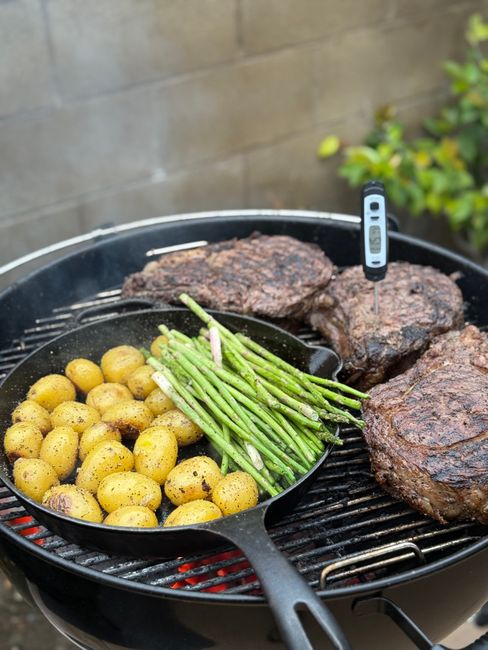
If you're a beginner, buy the ThermoPop 2 ($34) or an Alpha Grillers instant-read ($16). Both read in under 5 seconds and are accurate to ±1°F. You don't need anything fancier until you're smoking brisket regularly.
Quick Verdict Table
| Model | Price | Best For | Read Speed | Accuracy |
|---|---|---|---|---|
| Alpha Grillers Instant Read | $16 | Total beginners, occasional use | 3–4 sec | ±1°F |
| Kizen Instant Read | $20 | Budget buyers who want a display | 3–5 sec | ±1°F |
| ThermoPop 2 | $34 | Best overall for beginners | 3 sec | ±1°F |
| Lavatools Javelin Pro | $50 | Serious beginners, frequent grilling | 2–3 sec | ±0.9°F |
| Thermapen ONE | $105 | Want the last thermometer you'll ever buy | 1 sec | ±0.7°F |
What to Look For
Read Speed
For grilling, read speed matters more than most people realize. When you're holding a grill lid open, every second is heat escaping. A 3-second read is fine. A 10-second read is annoying and leads to the lid being open too long. The sweet spot for beginners: 3–5 seconds.
Accuracy
Look for ±1°F or better. For chicken safety (165°F), ±2°F is the maximum acceptable margin. Budget models that claim ±1°F but actually drift to ±3°F after a few months are common — stick to brands with documented accuracy specs like ThermoWorks, Lavatools, or Alpha Grillers (which has decent QC for the price).
Display Readability
Large backlit display. You'll be reading this at dusk with smoke in your eyes. A tiny unlit display will make you squint every single time. Not worth it. Any model under $20 without backlight is a compromise you'll regret quickly.
Waterproofing
IP65 is splash-resistant. IP67 means fully submersible for 30 minutes. You want at least IP65 for grilling — steam, rain, and juices happen. The probe cable on leave-in thermometers should be rated to at least 716°F (380°C).
Auto-shutoff
Beginners forget to turn things off. An auto-shutoff after 10 minutes is the difference between a $34 thermometer lasting 5 years or dying in 8 months because you left it on all night.
Budget Picks ($15–30)
Alpha Grillers Instant Read — $16
Pros: Reads in 3–4 seconds, folds away safely, decent backlight, actually accurate to ±1°F in most tests. For $16, this is the honest best value for someone who just wants to stop guessing.
Cons: Build quality is plastic-y and won't survive being dropped repeatedly. No IP rating listed. The probe is thicker than premium models, which means slightly slower readings in very thick cuts.
Bottom line: Perfect for the person who cooks chicken breasts and steaks twice a month.
Kizen Instant Read — $20
Pros: Large display, fast 3–5 second reads, comes with meat temperature guide printed on the sleeve. Good gift thermometer.
Cons: Slightly less consistent accuracy than Alpha Grillers. The fold-out probe hinge feels loose after heavy use.
Bottom line: Fine choice. Gets slightly better accuracy at $20 vs $16 — the extra $4 buys you a nicer display.
Mid-Range Picks ($35–60)
ThermoPop 2 — $34
Pros: ThermoWorks makes the most consistently accurate consumer thermometers on the market. The ThermoPop 2 is their entry-level model and reads in 3 seconds to ±1°F. Rotating display is legitimately useful when your hand is in an awkward position over the grill.
Cons: No backlight. Limited to 482°F max temp — which is fine for meat but not for candy or frying. Not foldable.
Bottom line: The best value thermometer for beginners who want proven accuracy. This is the one to buy if you'll cook regularly.
Lavatools Javelin Pro Duo — $50
Pros: 2–3 second reads, ±0.9°F accuracy, magnetic back, ambidextrous display, IP65 rated. Feels premium at a mid-range price.
Cons: Probe is slightly fragile — don't drop it. Auto-shutoff is aggressive (30 seconds) which can be annoying if you're slow between checks.
Bottom line: If you're going to cook seriously, skip the budget models and start here. The jump from $16 to $50 is real quality, not marketing.
Premium Picks ($80+)
Thermapen ONE — $105
One-second reads. ±0.7°F accuracy. IP67 waterproof. Motion-sensing auto-shutoff. The probe is thin enough to leave virtually no hole in the meat. ThermoWorks has been making this since 2007 and it's the benchmark every other thermometer is compared against.
Is it worth $105 for a beginner? Probably not in year one. But if you know you'll be grilling weekly and smoking brisket regularly, this is the last instant-read thermometer you'll ever buy. The math works out over 5–7 years of use. That's not snobbishness — it's just math.
Full Comparison Matrix
| Model | Backlit | Waterproof | Auto-off | Foldable | Best for beginners |
|---|---|---|---|---|---|
| Alpha Grillers | Yes | Splash | 10 min | Yes | Casual cooks |
| Kizen | Yes | Splash | 10 min | Yes | Gift buyers |
| ThermoPop 2 | No | Splash | Yes | No | Regular grillers |
| Javelin Pro | Yes | IP65 | 30 sec | No | Serious beginners |
| Thermapen ONE | Yes | IP67 | Motion | Yes | Long-term investment |
When the Cheap One Is Fine
If you cook chicken and steaks 3–4 times a month and your main concern is "is this chicken safe to eat," a $16–20 thermometer is absolutely fine. You don't need ±0.7°F precision for most home cooking. ±1.5°F is plenty when the USDA margin for safety is 165°F for poultry — a few tenths of a degree won't change the meal.
Budget is also fine if you're buying your first thermometer and you're not sure how much you'll actually use it. Buy cheap, use it for 6 months, and if you find yourself pulling it out every weekend, upgrade to a ThermoPop or Javelin Pro.
See our chicken temperature guide — this is where precise readings pay off the most, and where even a budget thermometer is better than no thermometer.
Common Buying Mistakes
Buying a dial thermometer because it looks professional. Analog dial thermometers read in 20–30 seconds and are accurate to ±3–5°F at best. Every beginner makes this mistake at some point. Digital instant-reads are objectively better for meat.
Assuming more features = more accuracy. A $30 thermometer with an app, alarms, and wireless connectivity is usually worse at the core job (accurate fast reads) than a $34 ThermoWorks model. Features are easy to add. Accuracy is hard to engineer.
Not checking the temperature range. Some budget models only go to 400°F. That's fine for most meats, but if you ever want to check oil temp for frying or sear temp on a cast iron, you need a model that goes to 572°F or higher.
Ignoring the warranty. ThermoWorks offers a 2-year warranty. Alpha Grillers offers lifetime replacement. The lifetime replacement claim from budget brands is often marketing fluff, but it says something about the company's confidence in the product. Read the fine print.
For guidance on safe internal temperatures for all proteins, see the USDA food safety guidelines.
FAQ
What's the most important feature for a beginner's first thermometer?
Speed and accuracy, in that order. A fast (3–5 second) read with ±1°F accuracy covers 95% of beginner cooking scenarios. Anything else — backlight, magnets, apps — is secondary.
Do I need a leave-in probe thermometer as a beginner?
Not right away. A leave-in probe is useful for smoking, roasting large cuts, or multi-hour cooks where you want continuous monitoring. Start with an instant-read. Add a leave-in probe if you start doing long cooks.
Is the Thermapen really worth $105?
If you cook meat more than twice a week, yes. Over 5 years that's $21/year for a tool you use constantly. If you cook occasionally, start with a ThermoPop 2 and see if you want to upgrade. The gap between the ThermoPop and Thermapen is real but not life-changing for casual cooks.
Can I use a meat thermometer for candy or deep frying?
Only if it's rated to the required temperature. Candy requires up to 350°F. Frying oil hits 350–375°F. Most meat thermometers cap at 400–572°F — check the spec sheet. Some budget models max out at 400°F, which is too close to frying temps for comfort.
How do I know if my new thermometer is accurate?
Ice water test: ice water at equilibrium should read 32°F ± 1°F. Boiling water at sea level should read 212°F ± 1°F (adjust for altitude — drops about 1°F per 500 feet of elevation). Do this before trusting any new thermometer.
What probe length do I need?
Minimum 4 inches for standard cuts. 4.5–5 inches is better for thick roasts and pork shoulders. A longer probe keeps your hand farther from the heat. Anything under 3.5 inches is annoying for grill work specifically.
Recommended by Titan Grillers
IP67 Waterproof Digital Meat Thermometer
Reads in 2–3 seconds · Backlit LCD · Built-in magnet · Free returns
Free BBQ Calculators
Use our free tools to nail your cook times, temperatures, and quantities every time.
You Might Also Like
Join the Grill Masters Club
Get exclusive recipes, techniques and special offers on our premium meat thermometers.