5 Essential Temperature Zones Every New Griller Should Know
This comprehensive guide explains the five essential temperature zones for grilling: searing zone (450-500°F), direct heat zone (350-450°F), indirect heat zone (300-350°F), medium-low zone (250-300°F), and smoking zone (225-250°F). The article details how to set up these zones on both gas and charcoal grills, explains which foods work best in each zone, highlights common mistakes, and demonstrates how to use multiple zones simultaneously for a complete meal. The importance of accurate temperature measurement is emphasized, with natural mention of the TITAN GRILLERS thermometer as a solution.

Temperature zones are why experienced grillers can cook five different things at once without burning any of them. A grill with one heat setting is a grill that overcooks thin pieces and undercooks thick ones at the same time.
Here are the five zones, what temperature each runs, and exactly what belongs in each one.
Why Temperature Zones Matter
A 1-inch ribeye needs about 5 minutes at 500°F to develop a proper crust. A bone-in chicken thigh at the same 500°F will char on the outside before hitting 165°F internally. These are not the same cook.
Multi-zone grilling solves this. The ribeye goes over the hot zone for crust development. The chicken goes over medium indirect heat until it's 10°F from target, then moves to the hot zone briefly for color. You're using the full grill as a tool, not just lighting it and hoping.
The practical benefit: you stop opening the lid to check every 2 minutes. You put meat in the right zone, you know what temperature that zone runs, and you check once near the end with a thermometer.
The Science of Grill Heat
Two heat transfer mechanisms matter on a grill:
- Radiant heat — infrared radiation from the coals or burners directly below the food. Creates searing and crust. Drops off with distance (intensity drops as the square of distance — move meat 2 inches higher and radiant heat drops by roughly 75%).
- Convection heat — hot air circulating inside a closed grill. Less intense than radiant, but cooks more evenly. The indirect zone relies primarily on convection.
Lid position changes everything. Open lid = primarily radiant heat from below. Closed lid = radiant plus convection. For thick cuts that need to cook through, closed lid is essential. For fast searing thin cuts, open lid gives you more direct control.
Zone 1: Direct High Heat (450–550°F)
This is directly over the hottest coals or the burner set to high. Surface temperature on the grate can exceed 600–700°F, though the air temperature 1 inch above is typically 450–550°F.
Best for:
- Steaks under 1.5 inches (2–4 minutes per side)
- Burgers (3–4 minutes per side)
- Hot dogs and sausages (direct heat, turn frequently)
- Thin fish fillets that you want char on
- Corn and other vegetables with high moisture content
Not for: Bone-in chicken (burns outside before cooking through), pork chops thicker than 1 inch, anything that needs more than 8–10 minutes total cook time.
How to measure zone 1: hold your hand 4–5 inches above the grate. In zone 1, you should pull your hand away in 2–3 seconds. Or use an instant-read in the area above the grate before cooking.
Zone 2: Direct Medium Heat (350–450°F)
Slightly off the hottest coals, or a gas burner set to medium. This is your workhorse zone — hot enough for good browning, cool enough that thick cuts cook through before burning.
Best for:
- Bone-in chicken pieces (start here, finish in Zone 1 briefly for color)
- Pork chops 3/4 to 1.5 inches thick
- Salmon fillets
- Thick burgers (over 3/4 inch) where you want a lower cook rate
- Vegetables like peppers, zucchini, mushrooms
Hand test: 4–5 seconds before you pull away. Most of your everyday grilling happens here.
Zone 3: Direct Low Heat (250–350°F)
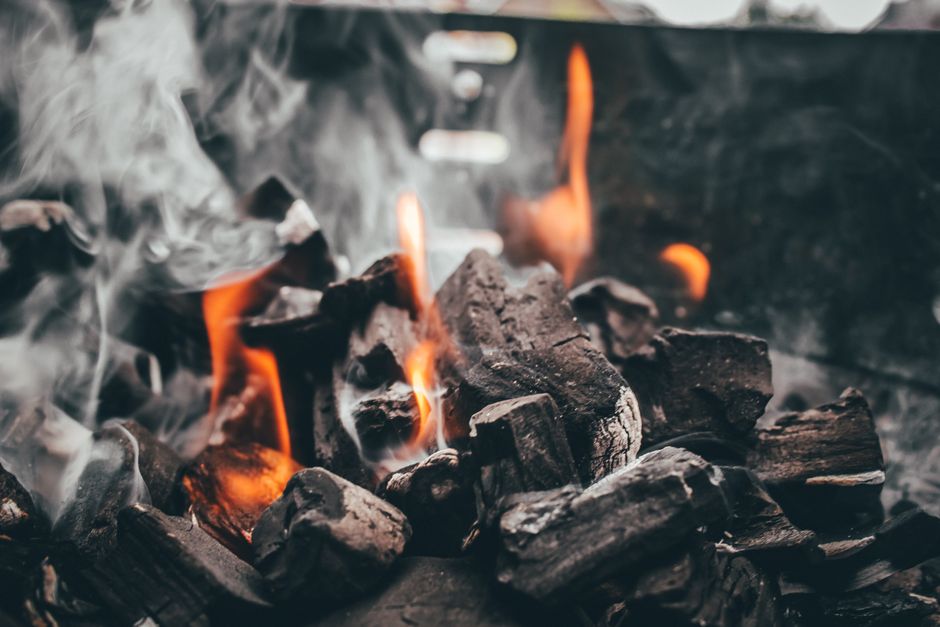
Lower direct heat — fewer coals, or a gas burner on low. Slower browning, more time for thick cuts to cook evenly.
Best for:
- Whole chicken legs/quarters (long cook time needed)
- Thick pork chops over 1.5 inches
- Finishing cuts that started in Zone 1 or 2 and need more internal heat without more char
- Cooking delicate fish or shellfish where high heat would cause sticking and tearing
Hand test: 6–8 seconds. This zone is also useful as a "holding" zone when you have food that finished before everything else is ready.
Zone 4: Indirect Zone (200–275°F)
No direct heat below — coals pushed to one side, or outer burners on with center off. The food cooks by convection from hot air circulating in the closed grill. This is the BBQ and low-and-slow zone.
Best for:
- Bone-in chicken quarters that need 45+ minutes
- Whole chickens and spatchcocked birds
- Rib racks (2–3 hours on a kettle grill)
- Large pork chops or thick butterflied leg of lamb
- Reverse sear method: start thick steaks here until 15°F below target, then move to Zone 1 to finish
The indirect zone requires a lid. Without the lid, you lose the convection effect and the temperature drops to ambient. The pork shoulder cook time calculator uses indirect zone temperatures for its estimates.
Zone 5: The Rest Zone (off heat)
Not on the grill at all — a cutting board, a plate, or a raised rack off to the side. Technically not a grill zone, but this is where the cook actually finishes.
During rest:
- Internal temperature continues rising 3–15°F (carryover cooking)
- Juices redistribute toward the center, which had been pushed outward by heat
- Muscle fibers relax and hold moisture better when cut
Minimum rest times: steaks/chops 3–5 minutes, chicken pieces 5 minutes, whole birds 15–20 minutes. Don't skip this. A steak cut immediately off the grill loses 30–40% more juice than one rested 5 minutes. Which you'll see pooling on the cutting board.
Setup By Grill Type
| Grill Type | Zone Setup | Temp Control Method |
|---|---|---|
| Kettle charcoal | Bank coals to one side; other side = indirect | Vent position (bottom and top) + coal amount |
| Gas (3+ burner) | Outer burners on, center off = indirect center zone | Burner knob settings; verify with grate-level thermometer |
| Gas (2 burner) | One burner on high, one off or low | Limited zone range; best for simple two-zone cooks |
| Pellet grill | Temperature dial sets the whole chamber; less zone variation | Front/back difference is 10–25°F; check with thermometer |
| Offset smoker | Hottest near firebox, coolest near exhaust | Map your cooker with thermometers before your first long cook |
Common Mistakes
Treating the Entire Grill as One Temperature
Every grill has hot spots and cool spots. Even a gas grill with consistent burners has 20–40°F variation across the grate surface. Map your grill at least once by placing a grid of bread slices and seeing where they toast fastest. Then use that knowledge to place food intentionally.
Not Preheating Long Enough
A gas grill takes 10–15 minutes to fully stabilize. A charcoal grill takes 15–20 minutes after the coals are lit for ash to form and temperature to even out. Putting food on before the grill is ready means the first minutes cook at lower-than-expected temperature, throwing off your timing.
Using Zone 1 for Chicken
The number one source of burnt outside/raw inside chicken. Bone-in pieces need 35–45 minutes at 350–375°F to cook through safely to 165°F. At 500°F, the skin burns in 10–12 minutes. Start chicken in Zone 2–3, move to Zone 1 for 2 minutes per side at the end if you want color. Check with a thermometer — the chicken temperature guide covers every cut and target temp.
Opening the Lid on Indirect Cooks
Every lid lift on an indirect Zone 4 cook drops the chamber temperature 50–75°F and takes 3–5 minutes to recover. A wireless leave-in probe eliminates this entirely. For an hourlong indirect chicken cook, 4–5 lid lifts to check add 15–25 minutes of effective cook time.
Skipping the Rest Zone
Zone 5 is part of the cook. Plan for it. Your steaks need 5 minutes off heat before you cut them. Your chicken needs 5 minutes. Your whole bird needs 15–20. If you're serving at 6:30, pull at 6:20, not 6:28.
FAQ
How do I measure grill temperature without a thermometer?
The hand test: hold your palm 4–5 inches above the grate. Count how long before you need to pull away: 2–3 seconds = high (Zone 1), 4–5 seconds = medium (Zone 2), 6–8 seconds = low (Zone 3), 9+ seconds = indirect/low. Not precise, but useful for relative comparisons across zones.
Can I do two-zone grilling on a small gas grill?
Yes. On a two-burner gas grill, set one burner to high and one to low (or off). You get a direct high zone and a cooler indirect zone. The temperature differential is less extreme than a larger grill, but it still gives you meaningful control over cook rate and finishing.
What temperature should I grill steak?
For steaks under 1 inch: Zone 1 at 450–550°F, 2–4 minutes per side. For steaks 1–2 inches: start in Zone 2 (350–450°F) to cook through, finish in Zone 1 for crust. For anything over 2 inches: reverse sear — start in Zone 4 indirect until 15°F below target, then 2 minutes per side over Zone 1.
How do I set up zones on a charcoal grill?
Bank your lit coals to one side of the grill. The side with coals = direct heat (Zone 1–3 depending on coal pile depth). The empty side = indirect Zone 4. For a two-level direct heat setup, put most coals in one layer and add some in a second layer for a higher Zone 1 on part of the grate.
Why does my grill thermometer read different from the grate temperature?
The built-in dome thermometer measures air temperature at the dome level, which is 6–10 inches above the grate and usually 25–50°F higher than the actual grate surface. For accurate zone measurement, use a separate probe at grate level, not the dome gauge.
Do I need a thermometer to use temperature zones?
You need a thermometer to verify that meat is cooked safely — no way around that. You don't necessarily need one to set up zones (the hand test and burner settings give you a working setup). But a thermometer to verify grate temperature lets you cook more precisely and repeat your best cooks reliably.
Recommended by Titan Grillers
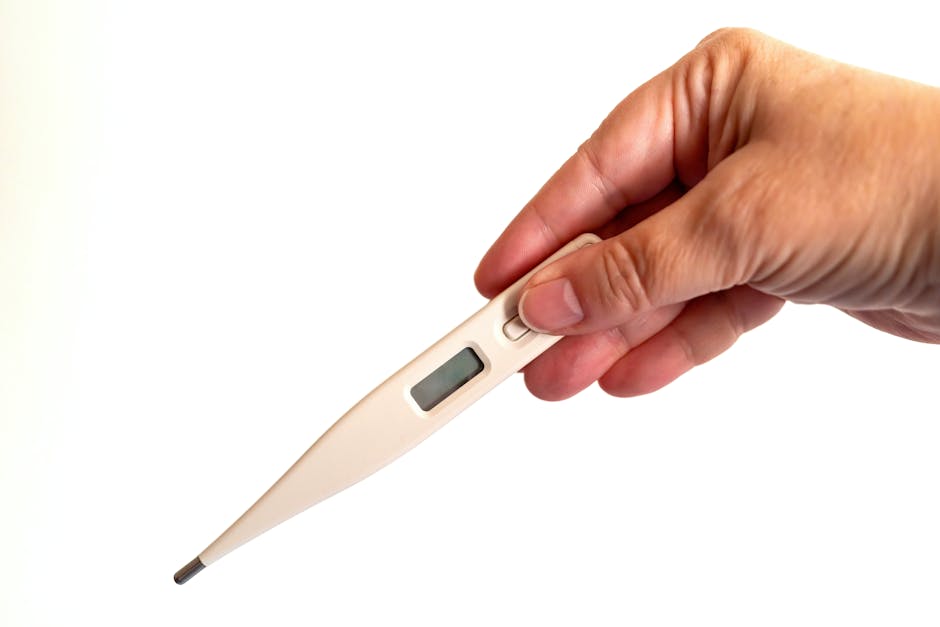
IP67 Waterproof Digital Meat Thermometer
Reads in 2–3 seconds · Backlit LCD · Built-in magnet · Free returns
Free BBQ Calculators
Use our free tools to nail your cook times, temperatures, and quantities every time.
You Might Also Like


Join the Grill Masters Club
Get exclusive recipes, techniques and special offers on our premium meat thermometers.